How to Choose a Private Label Supplement Manufacturer in China
-
 Yukang Medicine Content & Manufacturing Team
- 21st October 2026
The first questions buyers ask a manufacturer are usually about price, minimum order quantity and lead time. Those answers matter, but they are rarely where a supplement project succeeds or fails. The difficult part usually appears later: an ingredient specification is unclear, a formula does not suit the chosen format, packaging arrives late, or a label needs changes after it has already been sent to print.
A suitable private label manufacturer should do more than fill capsules or pack powder into jars. The right partner helps a brand turn a product idea into a defined, manufacturable and properly documented finished product. This guide explains what to look for before you request quotes from a supplement manufacturer in China.

Start with the product brief, not the quotation
A request for “the best price” is difficult to answer accurately when the product is still only a broad idea. A capsule formula can change significantly in cost depending on the extract specification, fill weight, capsule shell, bottle, count, label finish and order quantity. The same is true for gummies, softgels, powders and liquids.
Before contacting a factory, prepare a short brief. It does not need to be perfect. The manufacturer simply needs enough information to determine whether the project is feasible and to quote it on the right basis.
- Product format: capsules, softgels, gummies, tablets, powder, drops or liquid.
- Formula, reference product or a clear product direction.
- Target market, such as the United States, Europe or the Middle East.
- Target pack size and estimated first order quantity.
- Packaging expectations, including bottle, pouch, jar, carton or label support.
- Target launch window and any required testing or documentation.
If the formula is not final, that is normal. An experienced private label supplement manufacturing partner should be able to discuss realistic options rather than send a generic price list.
Ask whether the factory knows your format well
A supplier may offer several dosage forms, but buyers should still ask about experience with the specific format they intend to launch. Each format has its own production questions. Capsules may require attention to powder flow, fill weight, capsule shell and moisture protection. Softgels depend on compatible fill materials, shell performance and oxidation control. Gummies need practical answers on texture, active-ingredient stability and packaging. Powders require a close look at blend uniformity, flavor, scoop or sachet accuracy and moisture management.
For product-format examples, see YKNatura’s capsule product pages, softgel manufacturing examples and powder manufacturing examples. The purpose is not to copy a stock product blindly; it is to start the technical conversation with a workable reference point.
A useful question is: “Have you made comparable products, and what should we confirm before sampling?” The response often tells you more than a simple “yes, we can make it.”
Certificates matter, but the documents need context
GMP, ISO 22000, HACCP, HALAL and similar credentials are important signals, but they should be checked rather than treated as a collection of logos. Ask for current copies and review the legal company name, production address, scope, issuing body and validity period. The entity named on the certificate should match the entity you are paying and contracting with.
For products intended for the United States, it is also important to distinguish facility registration from product approval. The U.S. Food and Drug Administration’s dietary supplement guidance explains the regulatory context. FDA registration does not mean that a dietary supplement product is FDA-approved. Brands remain responsible for the final product, label and marketing claims used in their market.
The more practical discussion is about project documents. Ask what can be provided for your specific product: ingredient specifications, product specifications, certificates of analysis, batch records, microbiological or heavy-metal testing where applicable, and finished-product release information. The exact package will depend on the formula, destination market and contract.

Choose the formulation route that fits your stage
Not every new brand needs to start with a complicated formula from scratch. A ready-to-brand formula can be a sensible route when the priority is testing demand, controlling the first order and reaching the market sooner. It gives the brand a known starting point while leaving room to differentiate through positioning, packaging and future line extensions.
Custom formulation is more appropriate when a brand has a defined ingredient concept, a reference sample, a target serving size or a specific competitive position. At that point, the factory should review whether the formula fits the intended format, whether the target dose can physically fit in the selected capsule or softgel, and what changes may affect cost, flavor, stability or lead time.
The best technical support is not a factory agreeing to every request without comment. It is a manufacturer explaining what is workable and why a small adjustment may prevent a larger production issue later.
Use the sample stage to test the working relationship
A sample is not only a product preview. It is also the first real test of how the supplier manages a project. Use the stage to review product appearance, taste, odour, capsule size, powder solubility, gummy texture, bottle proportions, label readability and the accuracy of the information supplied.
Give feedback that can be acted on. “The chocolate flavor is too sweet,” “the powder needs to disperse more easily,” or “the label text is too small for this bottle” gives the team something clear to revise. A professional manufacturer should turn that feedback into a documented next step, not just reply that it can be handled.
YKNatura generally plans 7 to 10 days for samples, subject to the formula and materials required. After formula, sample and packaging are approved, a conventional production schedule is often around 15 days; custom packaging can add time. These are planning references rather than a substitute for a confirmed project timeline.
Do not choose an MOQ in isolation
A low minimum order quantity can help a new brand reduce early inventory risk, but it can also create a higher unit cost and less favorable packaging economics. A large order may lower the quoted unit price but tie up cash before the brand has validated demand. The right MOQ is the one that fits your sales plan, working capital and replenishment strategy.
Ask for pricing at several order levels, such as 1,000, 3,000 and 5,000 units. This makes the cost structure clearer and helps the team choose a launch quantity deliberately rather than simply selecting the lowest available MOQ.

Treat packaging and labels as part of manufacturing
Many projects are delayed not by the supplement itself but by the bottle, lid, pouch, carton, label artwork or outer-case information. Packaging should be discussed early, especially when the formula needs light protection, moisture control, seals, custom colors or export-ready carton marking.
Before bulk production, confirm the approved artwork version, pack configuration, label size, printed information and ownership of the final design files. If the product is sold in the United States, Europe or another regulated market, the brand should also have the final label and claims reviewed by an appropriate regulatory professional. A manufacturer can provide technical and packaging support, but it cannot replace the brand’s market-specific legal responsibilities.
Pay attention to how the factory answers difficult questions
Fast replies are helpful. Clear replies are more valuable. When you ask about a raw-material standard, a missing document, a packaging risk or a schedule change, does the factory explain the situation in plain terms? Does it state what has been confirmed, what remains open and what decision is needed from you?
This is often the clearest sign of a long-term manufacturing partner. The lowest quote is not always the lowest total cost if unclear specifications, repeated revisions or production delays later create avoidable work.
A short enquiry template you can send
The following message gives a manufacturer enough information to begin a useful conversation:
| Hello,
We are planning to launch a dietary supplement brand in [target market] and are looking for a private label or OEM/ODM manufacturer in China. Product format: [capsules / softgels / gummies / powder / liquid] Please let us know whether you can support formula development, samples, testing documents, label or packaging coordination and export-ready production. Please also share your MOQ, sample timing, production lead time and relevant quality certificates. Thank you. |
Before confirming production
Before a deposit is paid or bulk production begins, make sure the following points are confirmed in writing:
- Final formula, serving size and product specification.
- Raw-material requirements and agreed quality standards.
- Approved sample and packaging components.
- Order quantity, commercial terms and estimated production schedule.
- Artwork version, label information and print approval.
- Testing, COA or batch documentation that applies to the project.
- Shipping responsibilities, trade terms and how changes will be handled.
About YKNatura
YKNatura is the dietary supplement manufacturing brand of Yukang Medicine (Guangzhou) Co., Ltd. Established in 2015, the company states that it operates approximately 10,000 square metres of clean manufacturing space, more than 30 production lines, over 100 pieces of equipment and an R&D team of more than 30 people. Its service scope includes private label, OEM and ODM projects across hard capsules, softgels, gummies, tablets, effervescent tablets, powders, drops and liquid supplements.
For a new project, send the available formula, a reference product or even an early product concept. The team can discuss manufacturing feasibility, sample development, packaging and order planning before a final production proposal is made.
To start a project discussion, visit www.yknatura.com or email marketing@collagenyoung.com.
Frequently asked questions
What is a typical MOQ for private label supplements in China?
MOQ depends on the dosage form, formula, raw materials and packaging. Many standard projects begin around 1,000 units, while custom ingredients, special components or complex packs may require a higher quantity.
How long does a private label supplement project take?
A standard project may involve 7 to 10 days for samples and around 15 days for production after key approvals. The actual schedule depends on the formula, packaging, material availability and shipping plan.
Can I launch a product if I do not have my own formula?
Yes. Many brands begin with a ready-to-brand formula and use custom packaging. Others start from an ingredient idea or a competitor reference and develop a tailored formula with the manufacturer.
How should I verify a supplement factory in China?
Check current certificates, legal company identity, production address, format-specific experience, sample process, quality documents and communication quality. For higher-risk or larger projects, consider a video audit, third-party audit or in-person visit before placing a major order.
A final buyer’s checklist
Before you compare final quotations or approve a first production order, use this short review. It is designed to prevent the common gaps that appear between an early product idea and bulk manufacturing.
- The legal company name, production site and current certificates have been checked.
- The selected dosage form and formula have been reviewed for manufacturing feasibility.
- The target market and final label responsibilities have been agreed.
- The product specification, serving size and key ingredient standards are written down.
- A representative sample has been reviewed and approved.
- Bottle, pouch, carton, label and outer-case specifications are confirmed.
- The quotation explains what is included and what may change the price.
- The MOQ matches the sales plan and available working capital.
- The expected schedule includes sample, packaging and shipping time.
- Testing, COA or batch documentation requirements have been discussed.
- The trade terms, freight responsibilities and payment schedule are clear.
- Both sides know how formula, packaging or timeline changes will be managed.
A first order should establish a repeatable specification, not just produce one shipment. That makes future replenishment, line extensions and quality discussions much easier to manage.
Yukang Medicine Content & Manufacturing Team
Latest Supplement Manufacturing Insights
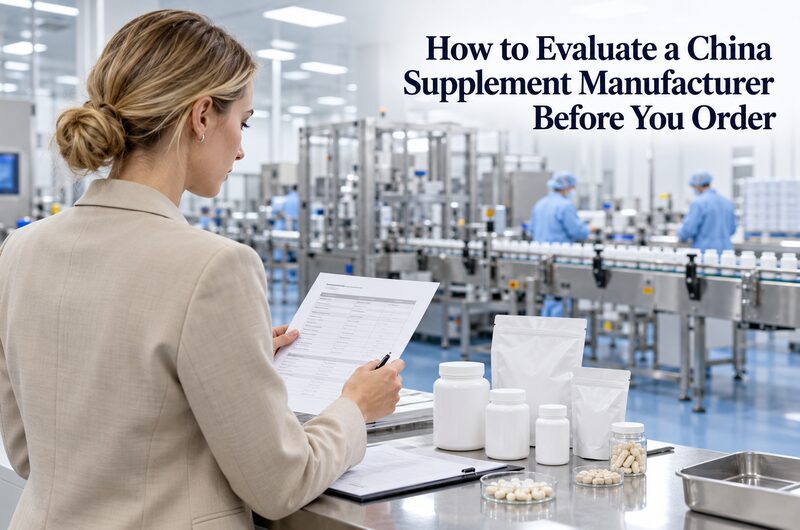
How to Evaluate a China Supplement Manufacturer Before You Order
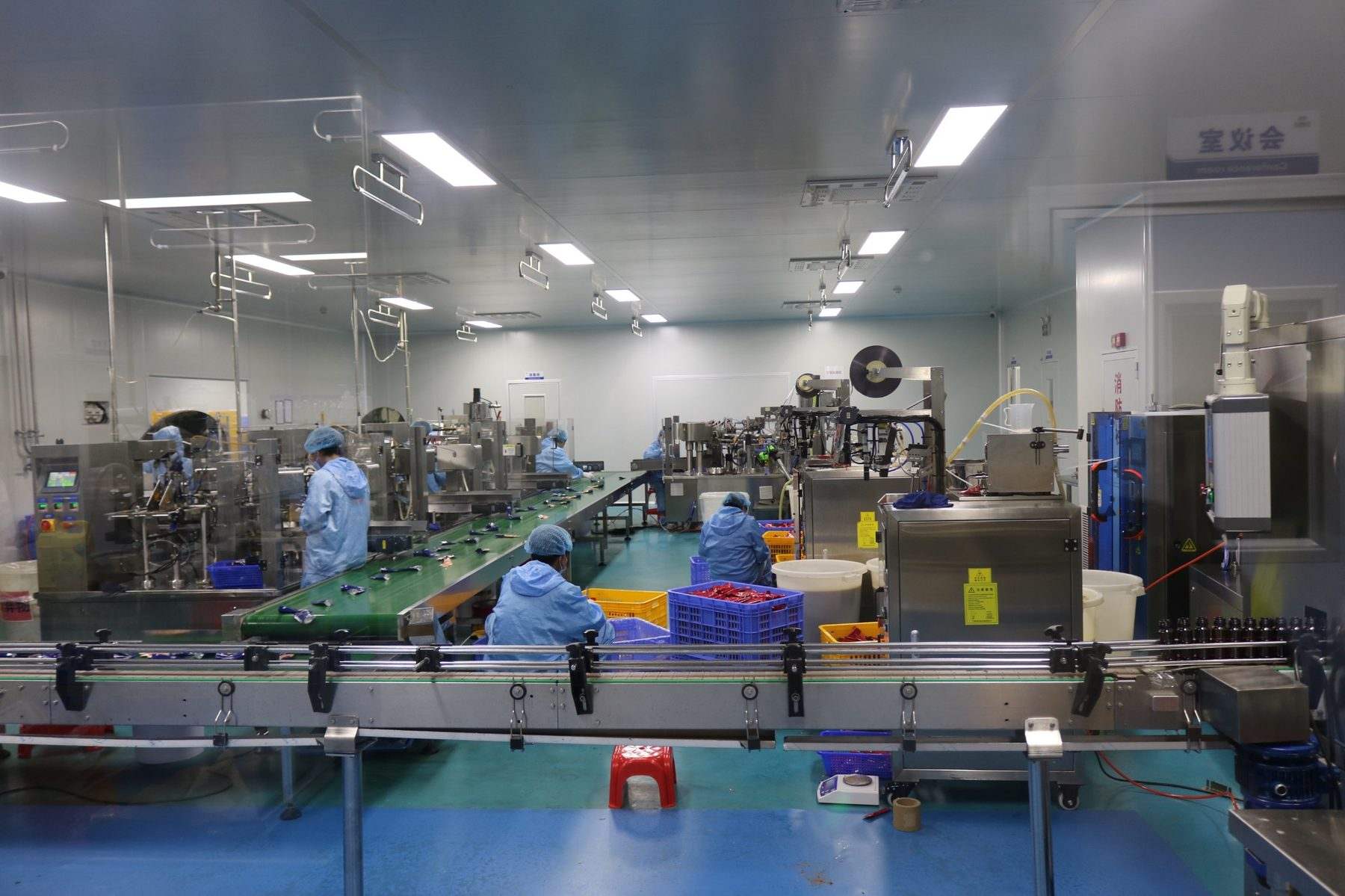
Capsules Gummies Powders and Softgels Guide for Supplement Brands