How to Evaluate a China Supplement Manufacturer Before You Order
-
 Yukang Medicine Content & Manufacturing Team
- 2nd November 2026
A practical first order guide for supplement founders, distributors, and sourcing teams
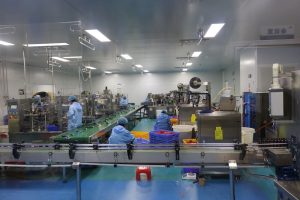
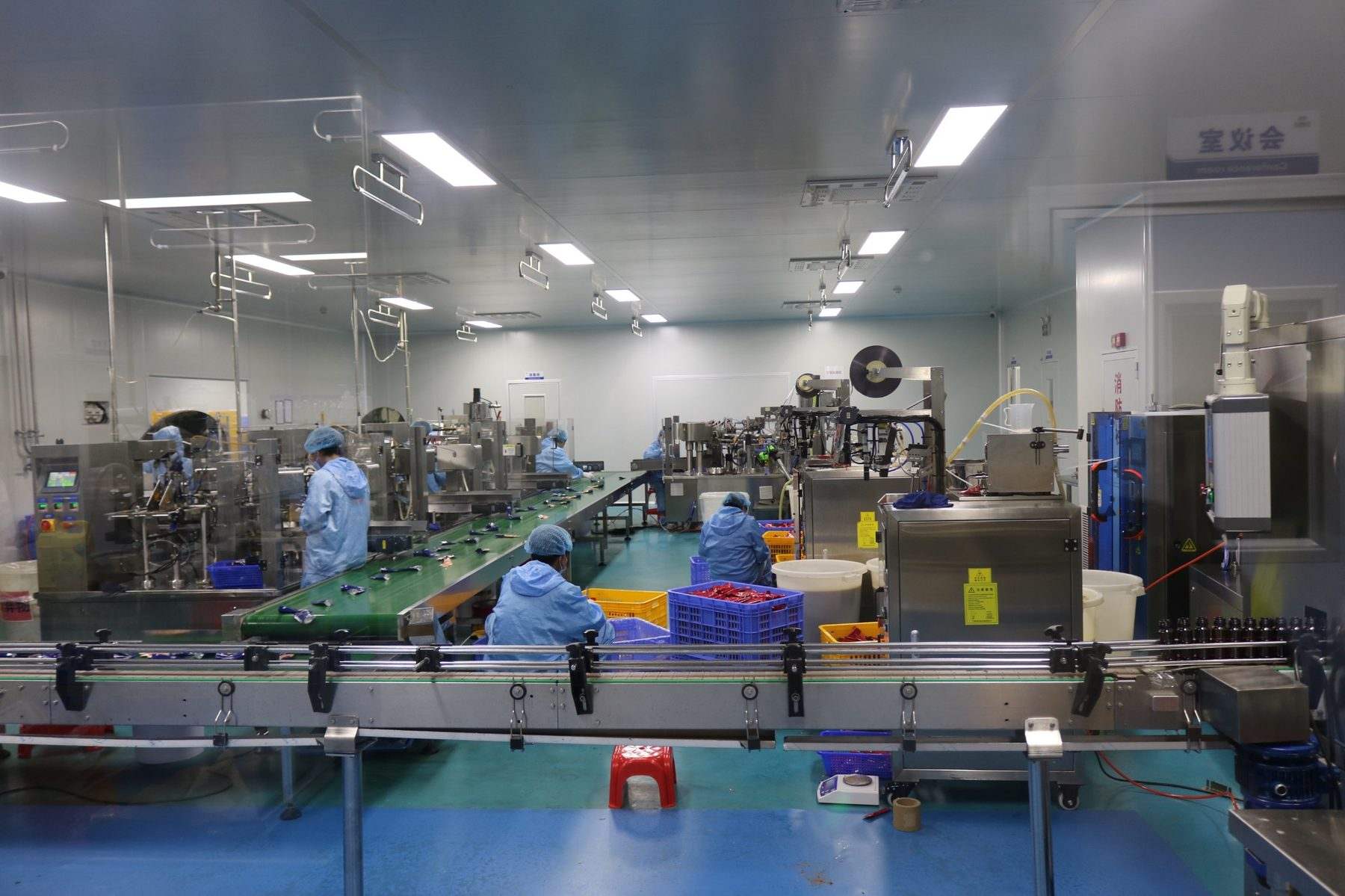
Factory floor view: production capacity is useful context, but documentation and process control deserve equal attention.
The short answer
A good manufacturer is not simply the one with the lowest quoted unit price. Before you issue a purchase order, make sure the supplier can explain the formula, show how materials are controlled, quote the full scope clearly, and communicate in a way your team can actually work with. A clean facility photo is encouraging. It is not proof on its own.
For a first order, the safest approach is to verify the project in layers: product fit, quality evidence, commercial details, packaging readiness, and working rhythm. This guide walks through the questions behind each layer in plain English.
Who this guide is for
This is written for people bringing a dietary supplement to market: a first-time brand owner, an Amazon operator, a distributor adding a house line, or a product manager moving work from one supplier to another. It applies whether you are buying capsules, gummies, tablets, powders, liquids, or softgels.
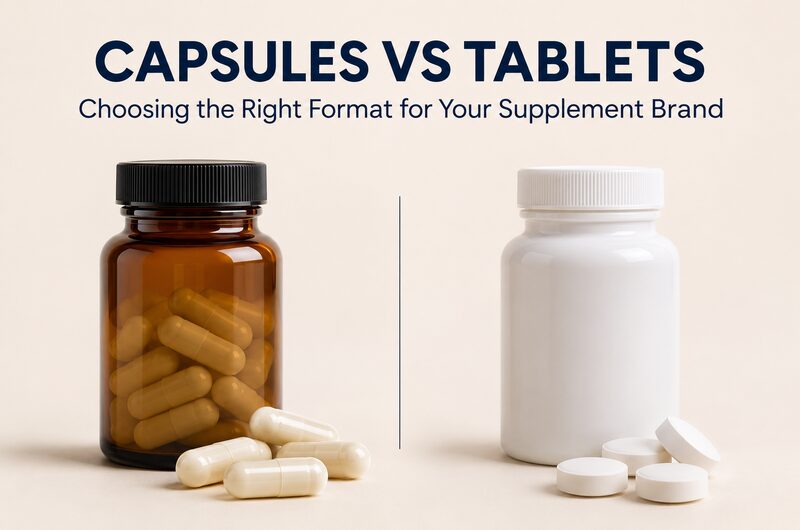
If your starting point is the delivery format rather than a finished formula, compare the practical trade-offs in our guide to capsules, gummies, powders and softgels before narrowing the manufacturing shortlist.
Start with a one page product brief
The fastest way to get vague quotations is to send a vague request. You do not need to know every processing detail, but a manufacturer should receive enough information to tell you what is feasible and what needs work. Put the basics in one document before you start comparing replies.
- Target market and sales channel, such as the United States, UK, EU, Canada, or Australia.
- Product format, serving size, count per pack, and the preferred pack type.
- Formula or active ingredients, including the target dosage per serving when known.
- Flavor, color, sweetener, allergen, dietary, or ingredient restrictions.
- Your forecast quantity, target launch date, and whether you need samples first.
- The documentation you expect to review before production and before shipment.
A serious supplier may push back on part of the brief. That is usually productive. A powder may not flow well at the serving size you want; a gummy may not hold a proposed active at the desired dose; a bottle and count may change the packed volume. You want those conversations before artwork and deposit, not after.
What to evaluate before you compare prices
Use the same questions for every supplier. That gives you a cleaner comparison than comparing one factory’s short quote with another factory’s polished sales deck.
| Area | What to ask | Useful evidence | Watch for |
| Formula fit | Can this formula work in this format and serving size? | A written feasibility note and a sample plan. | A simple yes before anyone has reviewed the details. |
| Material control | How are incoming ingredients identified, released, and traced? | Relevant specifications, batch documentation examples, and a clear testing explanation. | Only broad claims with no project-specific answer. |
| Facility process | Which line will make and pack the product? How are changes managed? | A process explanation, tour or video, and named project contacts. | Photos that cannot be connected to the actual project. |
| Commercial scope | What exactly is included in the quote? | Line-by-line detail for formula, packaging, testing, freight terms, and any setup costs. | A low number with major items left undefined. |
| Packaging readiness | Can the selected pack protect the product through shelf life and transit? | Pack options, artwork requirements, and a responsibility list. | Packaging discussed only after the formula sample is approved. |
| Communication | Who owns the timeline and how are changes recorded? | A dated project plan and a written change-confirmation process. | Important decisions living only in chat messages. |
1 Check product feasibility before sample work begins
A sample is not a miniature production order. It is a development checkpoint. Ask the manufacturer to confirm the intended format, dosage, ingredient form, and packaging direction before assuming that a concept can move straight into mass production. This matters most when a formula contains high loads, heat-sensitive materials, live cultures, challenging flavors, or ingredients with limited physical room in a capsule or gummy.
If your concept is a powder, review the available custom powder manufacturing options early. For an encapsulated product, start with the capsule product range and confirm what is practical for your serving size.
2 Ask for evidence of a working quality system
The right question is not “Are you certified?” by itself. Ask what documentation can be provided for your project, who reviews it, and at what stage. Depending on the market and product, your review may include raw-material specifications, supplier information, batch records, finished-product specifications, certificates of analysis, microbiological testing, heavy-metal testing, allergen information, stability considerations, and export documents. The exact package should be agreed in writing.
Do not treat a certificate logo on a website as the end of diligence. Confirm the certificate scope, dates, legal entity, and production location. If a claim is important to your sales channel, ask for the supporting document before you use it in marketing or on artwork.

A facility walkthrough helps you understand the operating environment. Pair the visit with project-specific documents and clear questions.
3 Read the quotation as a project map
A useful quotation should tell you what you are buying, what assumptions sit behind the price, and what could change it. It should not force you to guess whether bottle, cap, label, outer carton, testing, artwork support, or freight is included. Ask for a revision if the scope is unclear. The goal is not to negotiate every line immediately; the goal is to know what you are comparing.
- Formula and ingredient assumptions, including dosage and flavor or excipient choices.
- Pack configuration: container, closure, label, count, carton, and any inserts.
- MOQ, price breaks, sample costs, tooling or plate costs, and payment terms.
- Testing and documentation included, plus any costs triggered by a new requirement.
- Lead-time assumptions: material availability, artwork approval, production, release, and shipping.
- Incoterms, destination, freight responsibility, and insurance if freight is quoted.
4 Treat packaging as part of quality
Packaging does more than carry branding. It affects moisture protection, breakage risk, labeling space, storage, shipping cost, and the way the customer receives the product. A pouch may suit one powder project; a bottle or stick pack may better suit another. Discuss the pack while you are still choosing the product direction, not after you have approved a formula sample.
For a broader view of how private label, OEM, and ODM projects are scoped, see Private Label vs OEM vs ODM Supplements. It helps clarify where the manufacturer’s existing platform ends and development work begins.
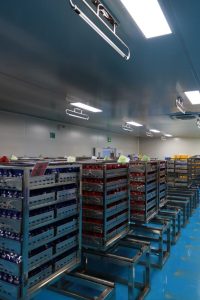
Finished goods awaiting the next stage of handling: ask how lots are identified, stored, and released before shipment.
5 Test communication before you place the order
The first few emails often predict the project. Notice whether the manufacturer answers the actual question, flags unknowns, and records decisions clearly. You are looking for a team that can say “we need to check that” when appropriate, then come back with an answer. Fast replies are useful; reliable follow-through is more valuable.
Before the deposit, ask for a simple milestone plan with an owner for formula confirmation, sample sign-off, artwork approval, packaging arrival, production scheduling, quality release, and shipping. If something changes, request that the revision is confirmed by email or in a shared specification—not only in an informal message thread.
A practical first order sequence
1 Build the brief Define market, formula targets, format, packaging direction, volume, and deadline.
2 Shortlist suppliers Compare suppliers using the same request and the same evidence standard.
3 Run feasibility review Confirm the product can be made as planned before paying for a production sample.
4 Review the commercial scope Check the quotation, pack components, testing, lead times, and freight terms.
5 Approve sample and artwork Record the approved formula, sensory standard, label content, and packaging specification.
6 Confirm production release Make sure the final purchase order matches the approved documents and responsibilities.
7 Review release and shipment Agree which documents and inspection steps are needed before the goods leave the factory.
Three mistakes that create avoidable delays
First, choosing an ingredient trend before checking if the dose fits the chosen format. Second, treating the sample as the final product while leaving packaging and label decisions open. Third, comparing quotes without normalizing the scope. None of these problems is unusual. They are simply easier to solve at the beginning of a project.

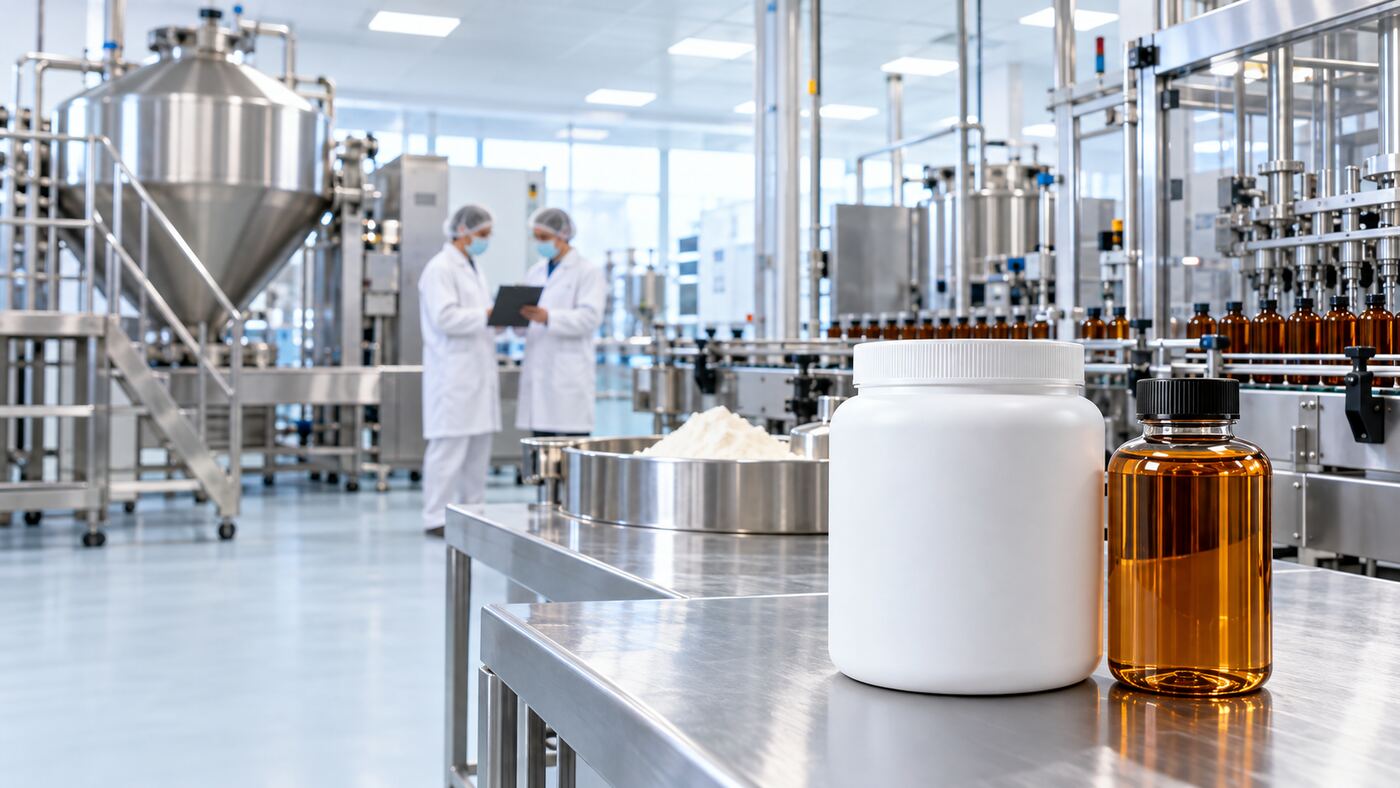
A controlled production environment is one part of the picture. The project still needs clear specifications, release criteria, and traceable decisions.
Frequently asked questions
Should I visit the factory before ordering?
A visit can be valuable, especially for a large or long-term program, but it is not a substitute for documentation. If travel is not practical, ask for a live video walkthrough focused on the relevant production and packing areas, then follow up with written answers and project documents.
What should I approve after receiving a sample?
Confirm the formula, sensory characteristics where relevant, dosage format, pack direction, labeling inputs, and any acceptance criteria that matter to the product. Ask what has changed between sample scale and planned production scale.
How do I compare two suppliers fairly?
Send the same brief, request the same level of quotation detail, and score the evidence—not just the headline price. Separate product feasibility, quality documentation, packaging, terms, and communication in your comparison.
Is the lowest MOQ always the best option?
Not necessarily. A low MOQ can be useful for testing demand, but check the unit price, shelf-life plan, packaging costs, and whether the quantity supports a stable production setup. Your best first order is the one that matches demand without making the project fragile.
Can a manufacturer guarantee regulatory approval?
No responsible manufacturer should guarantee that a finished product will meet every requirement in every market. The brand owner and relevant advisors still need to review claims, labeling, ingredient status, and market-specific obligations. A capable manufacturer should help provide the technical information needed for that review.
Where to go next
If you are moving from a concept to supplier conversations, start by deciding whether you need an existing formula platform, a light customization, or a fully custom development path. Then build a one-page brief and use this guide as your question list. A manufacturer relationship is easier to manage when the product, quality expectations, packaging, and timeline are visible to both sides from the start.
Explore YKNatura supplement manufacturing services or request a discussion through www.yknatura.com.
Yukang Medicine Content & Manufacturing Team
Latest Supplement Manufacturing Insights