Best OEM Dietary Supplement Manufacturers in China: A Complete Guide for Global Brands
-
 Yukang Medicine Content & Manufacturing Team
- 13th October 2026
A Practical Guide for Global Brands, Private Label Buyers, and Product Developers
Choosing the right OEM dietary supplement manufacturer in China can help supplement brands develop customized products, manage production costs, and build a dependable supply chain. The right supplier is not necessarily the one with the lowest price or the largest advertised facility; it is the one whose documented capabilities match your formula, dosage form, target market, budget, and quality requirements.
This guide explains how to compare OEM and ODM services, evaluate quality documentation, plan a first order, and assess YKNatura’s OEM/ODM supplement manufacturing services alongside other potential suppliers. It is designed as a buyer’s checklist rather than an unsupported ranking of manufacturers.

1. What Is an OEM Dietary Supplement Manufacturer?
An OEM dietary supplement manufacturer produces products according to a customer’s agreed formula, product specifications, or design requirements. Depending on the supplier, services may include ingredient sourcing, formulation support, manufacturing, filling, labeling, packaging, and documentation.
| Service model | What it usually means | Best suited for |
| OEM manufacturing | Production based on the buyer’s formula or approved specifications. | Brands with a defined formula or detailed product brief. |
| ODM development | Product-development support that may include formula concepts, sample development, and customization. | Brands that need technical support turning an idea into a manufacturable product. |
| Private label | Products sold under the buyer’s own brand, using an existing or customized manufacturing solution. | Startups, distributors, e-commerce sellers, and established brands launching new SKUs. |
The terminology is not always used consistently across the industry. Before signing an agreement, ask exactly which services are included, who owns the formula, whether the formula is exclusive, and which development or testing costs are charged separately.
2. How to Choose the Best Supplement Manufacturer in China
There is no single factory that is best for every product. Use the same questions and evidence requirements for each candidate so that quotations can be compared fairly.
2.1 Manufacturing Capabilities and Product Formats
Confirm that the supplier can manufacture your intended dosage form and explain which operations happen in-house versus through qualified external partners. A website product gallery is a useful starting point, but it is not a substitute for facility-specific confirmation.
| Format | Common technical considerations | Questions to ask |
| Hard capsules | Ingredient compatibility, fill weight, capsule material, moisture sensitivity. | Which capsule materials and sizes are supported? What in-process checks are performed? |
| Softgels | Oil-based fill, shell compatibility, leakage, size, stability. | Can the facility produce the specific oil or suspension formula? What tests are available? |
| Gummies | Texture, flavour, active-ingredient compatibility, moisture, stability. | Which gummy bases are available? Are sugar-free or vegan options feasible for this formula? |
| Tablets / chewables | Compression, hardness, dissolution, taste, coatings. | Can you meet the target weight, shape, coating, and performance specifications? |
| Powders / stick packs | Flow, blending uniformity, moisture, flavour, pack accuracy. | What packaging sizes and blend-uniformity controls are available? |
| Liquids / drops | Solubility or dispersion, preservation where relevant, container compatibility. | How are stability, microbial risk, dosing accuracy, and shelf life assessed? |

2.2 Custom Formulation and R&D Support
A capable OEM/ODM partner should be able to discuss ingredient selection, dosage form, serving size, taste, texture, solubility, packaging compatibility, and stability requirements. Ask whether the team can work from your existing formula or develop a formula around your product concept.
| Question for the supplier | Why it matters |
| Can you develop a formula from my product brief? | Clarifies whether technical development is part of the service. |
| Can you manufacture using my existing formula? | Checks whether your specifications can be followed. |
| Can you provide ingredient specifications and COAs? | Helps assess raw-material identity and quality documentation. |
| Are samples and pilot batches available? | Allows the brand to assess the product before commercial production. |
| Who owns the formula, and how is confidentiality handled? | Protects intellectual property and limits disputes. |
For product and market considerations, consult the FDA’s dietary supplement information when the United States is a target market. Market-specific rules vary, so regulatory review should be completed for the intended destination rather than assumed to be included in a standard manufacturing quotation.
2.3 Quality Control and Testing Documentation
Quality claims should be supported by relevant records. The exact tests depend on ingredients, formula, dosage form, and destination market; no single checklist applies identically to every product.

| Stage | Documents or checks to discuss | What they help establish |
| Raw materials | Specifications, supplier qualification, ingredient identity checks, COAs. | Whether incoming ingredients match the agreed requirements. |
| In-process controls | Batch records, weight checks, blending or filling checks, line clearance. | Whether manufacturing is controlled against approved instructions. |
| Finished product | Finished-product specifications and applicable test reports. | Whether the product meets agreed quality criteria. |
| Contaminants | Microbiological, heavy-metal, or other risk-based testing where applicable. | Whether relevant safety and quality risks have been assessed. |
| Stability / shelf life | Stability protocol, supporting data, packaging compatibility information. | Whether the proposed shelf life has an adequate technical basis. |
| Traceability | Batch/lot identification, retained samples, deviation and complaint processes. | Whether issues can be investigated and records retrieved. |
For the U.S. market, buyers can review the FDA’s dietary supplement CGMP guidance and the applicable text of 21 CFR Part 111. These resources explain important manufacturing, packaging, labeling, and recordkeeping requirements for dietary supplements.
2.4 Certifications and Regulatory Responsibilities
Ask for complete, current documents rather than a list of certification logos. Check the certificate holder, facility address, scope, issuing organization, validity dates, and whether the certificate covers the process and site relevant to your order.
| Important distinction: FDA facility registration is not the same as FDA approval of a dietary supplement, and registration does not mean that the FDA endorses a product or its effectiveness. |
Before production, clarify who is responsible for ingredient compliance, label review, claims, import documents, and market-specific obligations. For U.S. projects, use the FDA resources linked above and obtain qualified regulatory advice where needed.
2.5 MOQ, Pricing, and Lead Times
Minimum order quantity (MOQ) varies by product, ingredients, dosage form, packaging, and customization. Compare total project cost rather than unit price alone, and ask each supplier to state exactly what is included.
| Cost item | What to confirm in the quotation |
| Formula / development | One-time R&D fee, revision allowance, formula ownership, and sample cost. |
| Ingredients | Ingredient grade, specification, sourcing assumptions, and price validity. |
| Manufacturing | MOQ unit of measure, production price, overage or scrap assumptions. |
| Packaging | Bottle, cap, label, carton, pouch, sachet, artwork setup, and print proofs. |
| Testing / documentation | Included tests, external laboratory fees, COA availability, stability support. |
| Logistics | Incoterms, freight, insurance, customs, delivery estimates, and who acts as importer. |
Request separate estimates for formula development, sample approval, mass production, testing, and shipping. A single generic lead-time promise is less useful than a schedule with clear milestones and assumptions.
3. YKNatura: An OEM/ODM Partner to Evaluate
YKNatura presents itself as a private label and OEM/ODM dietary supplement manufacturing brand operated by Yukang Medicine (Guangzhou) Co., Ltd. Its About Us page and product catalogue describe a range of supplement formats and manufacturing-related services for global brands. These pages are a useful starting point for a buyer’s enquiry, not a substitute for document verification.
The product information available on the company website includes categories such as hard capsules, softgels, gummies, tablets, powders, liquids, and drops. Buyers should confirm whether the specific formula and package can be manufactured at the proposed facility, which steps are in-house, what testing is included, and what the current MOQ and timeline would be.
| YKNatura evaluation area | What to review or request before ordering |
| Product fit | Review the product catalogue, identify the exact dosage form, and confirm project-specific feasibility. |
| Company and facility | Confirm the legal entity, current production address, manufacturing scope, and whether any step is outsourced. |
| Quality documents | Request current certificates and product-relevant testing examples, then check holder, site, scope, and validity. |
| Development process | Ask about formula feasibility, sample iterations, approval criteria, and formula ownership. |
| Commercial terms | Obtain a written MOQ, full cost breakdown, lead-time schedule, payment terms, and shipping conditions. |
For product scope, see YKNatura’s product catalogue; for company information, see About YKNatura. Before making a decision, ask the company to provide project-specific written answers and documents.
4. Other Chinese Supplement Manufacturers to Compare
A shortlist should contain several plausible candidates. Compare them against the same criteria, and avoid treating website marketing claims as a third-party ranking or independent audit.
| Supplier candidate | Public starting point | What to verify directly |
| YKNatura / Yukang Medicine | The company website describes private label and OEM/ODM services across multiple supplement formats. | Exact product fit, current site and legal entity, certificates, tests, MOQ, sample process, and delivery terms. |
| SIRIO Pharma | Review the company’s official website for current portfolio and service information. | Which site makes your product, relevant dosage forms, quality documentation, commercial MOQ, and project timelines. |
| Additional qualified suppliers | Identify companies with demonstrable experience in your intended product and target market. | Same document and quotation checklist; verify production locations and outsourced steps. |
Review the SIRIO Pharma official website directly, and use the same evidence checklist for every supplier.
| How to interpret this table: It is a research shortlist, not an independently verified ranking or endorsement. Verify all suppliers using current documents, samples, references, and project-specific quotations. |
5. A Practical OEM/ODM Project Workflow
| Step | Action | Output to approve before moving on |
| 1. Product brief | Define formula or concept, target market, serving size, dosage form, estimated order quantity, and packaging. | Written product brief and target specifications. |
| 2. Feasibility review | Discuss ingredient availability, formulation constraints, packaging, compliance, and testing needs. | Feasibility feedback, exclusions, and project estimate. |
| 3. Samples | Evaluate sample appearance, taste, texture, dosage form, and packaging compatibility as relevant. | Documented sample approval and revision notes. |
| 4. Technical review | Finalize formula, label artwork, specifications, testing plan, and regulatory responsibilities. | Approved formula, artwork, and quality plan. |
| 5. Commercial agreement | Agree MOQ, price, payment, lead time, inspection, shipping, and handling of deviations. | Signed order and clear milestone schedule. |
| 6. Batch release | Review the agreed production records and quality documentation before shipment. | Release documents, lot identification, and shipment records. |
6. Supplier Evaluation Checklist
Use the same checklist for every supplier call. If a critical item cannot be verified, record it as open rather than assuming it is satisfied.
| Evaluation factor | Questions to answer | Evidence to collect |
| Legal identity | Who signs the contract and which facility produces the goods? | Business registration details, address, manufacturing scope. |
| Experience | Has the supplier made similar products? Can it share approved examples or references? | Relevant case studies, sample history, client references with permission. |
| Technical expertise | Can the team explain likely formulation and stability constraints? | Written feasibility notes, specifications, sample approval records. |
| Quality system | Which controls and tests apply to this formula and batch? | Current certificates, test reports, COA example, batch-traceability process. |
| Commercial terms | Are costs, MOQ, timing, ownership, and exclusions clear? | Itemized quotation and written contract terms. |
| Communication | Are questions answered clearly and are changes documented? | Meeting notes, action list, and version-controlled specifications. |
7. Frequently Asked Questions
What is the typical MOQ for private label supplements in China?
There is no universal MOQ. It depends on the formula, dosage form, ingredients, package, and whether the supplier is using a standard formula or developing a customized product. Request a written MOQ for the exact specification.
Can one manufacturer produce capsules, gummies, and powders?
Some manufacturers support multiple dosage forms, but buyers should verify which formats are made at the same facility and whether any operation is outsourced. Do not infer in-house production from a product page alone.
How do I verify a manufacturer’s certifications?
Request the full certificate and check the certificate holder, site address, issuing organization, scope, and validity period. Where possible, verify the document with the issuer. Facility registration should not be described as product approval.
How long does supplement manufacturing take?
Timing depends on formulation, raw material availability, sample approval, packaging, testing, capacity, and shipping. Ask for separate milestone estimates rather than relying on a single headline lead time.
What should I include in an RFQ?
Include target market, product format, formula or concept, serving size, estimated order quantity, packaging preference, testing requirements, and target delivery date. More complete specifications make quotations easier to compare.
8. Start Your Private Label Supplement Project with YKNatura
If you are exploring a manufacturing partner for capsules, gummies, tablets, powders, softgels, liquids, or drops, begin by defining the product requirements and requesting project-specific confirmation from YKNatura. The company’s product catalogue is a starting point for identifying relevant formats.
When requesting a quotation, provide the product concept or formula, target market, estimated quantity, packaging requirements, and required quality documentation. Ask for a written response covering feasibility, sample steps, MOQ, total costs, testing, timelines, and commercial terms.
What to Include in Your First Manufacturing Enquiry
| Information | What to provide |
| Product format | Capsule, gummy, tablet, powder, softgel, liquid, drop, or another format. |
| Target market | Country or region where the product will be sold. |
| Formula or concept | Existing formula and specifications, or the product concept and desired ingredients. |
| Order quantity | Estimated quantity for the first order and expected repeat-order volume if known. |
| Packaging and branding | Bottle or pouch type, pack size, label status, and any custom packaging needs. |
| Quality / regulatory needs | Required tests, certificates, label review, and documentation for your target market. |
| Timing and budget | Desired launch date, sample deadline, and target budget if available. |
| Buyer takeaway: The right OEM/ODM partner is the one whose capabilities match your project, supports its claims with relevant documents, communicates transparently, and agrees on specifications and responsibilities in writing. |
Yukang Medicine Content & Manufacturing Team
Latest Supplement Manufacturing Insights
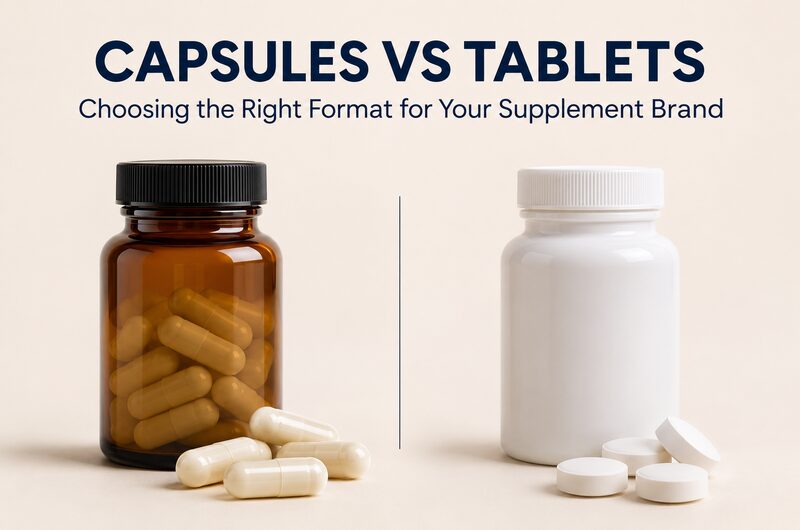
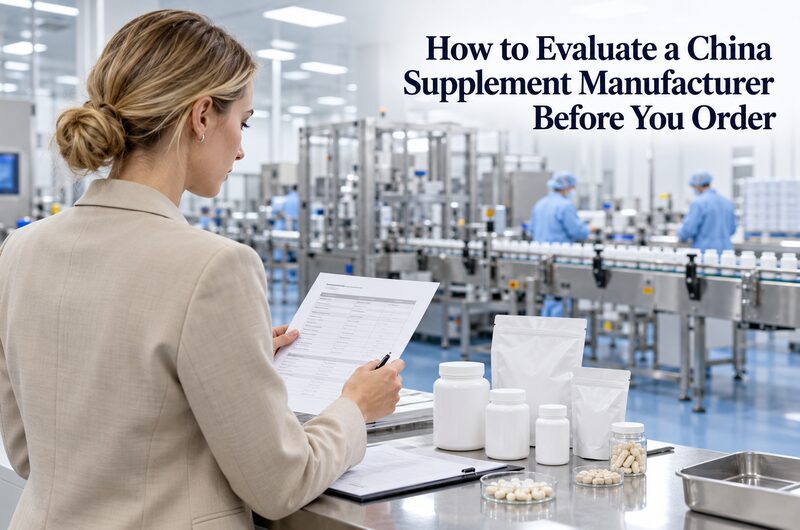
How to Evaluate a China Supplement Manufacturer Before You Order
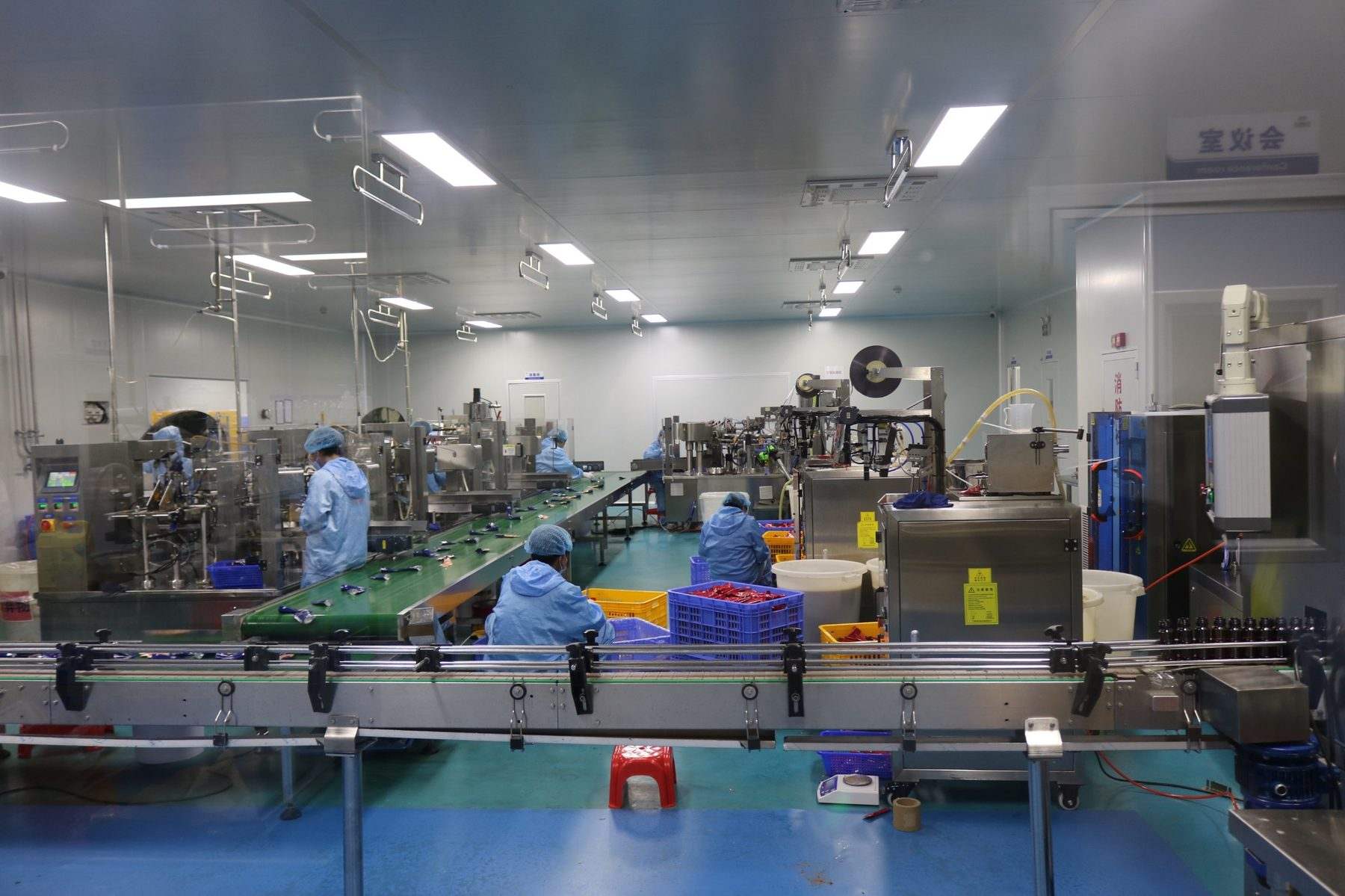
Capsules Gummies Powders and Softgels Guide for Supplement Brands