Private Label vs. Custom Supplements: Which Is Right for Your Brand?
-
 admin
admin - 25th August 2026
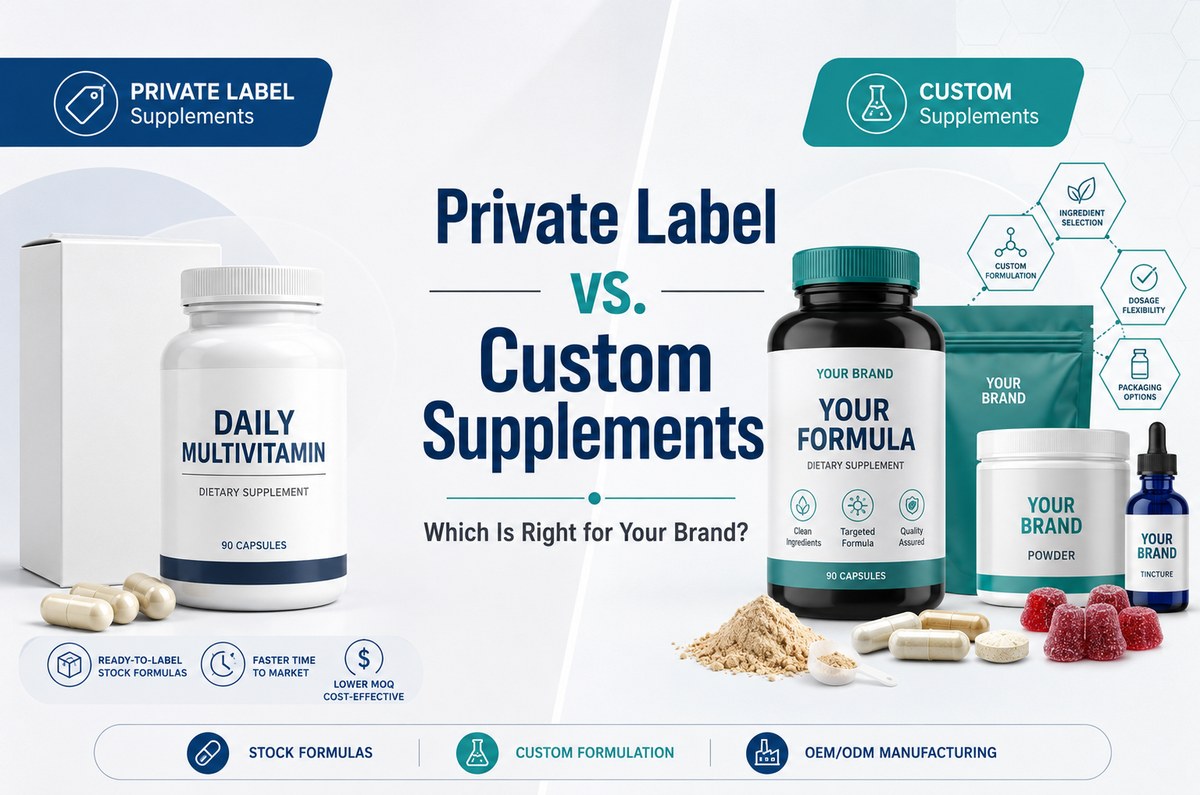
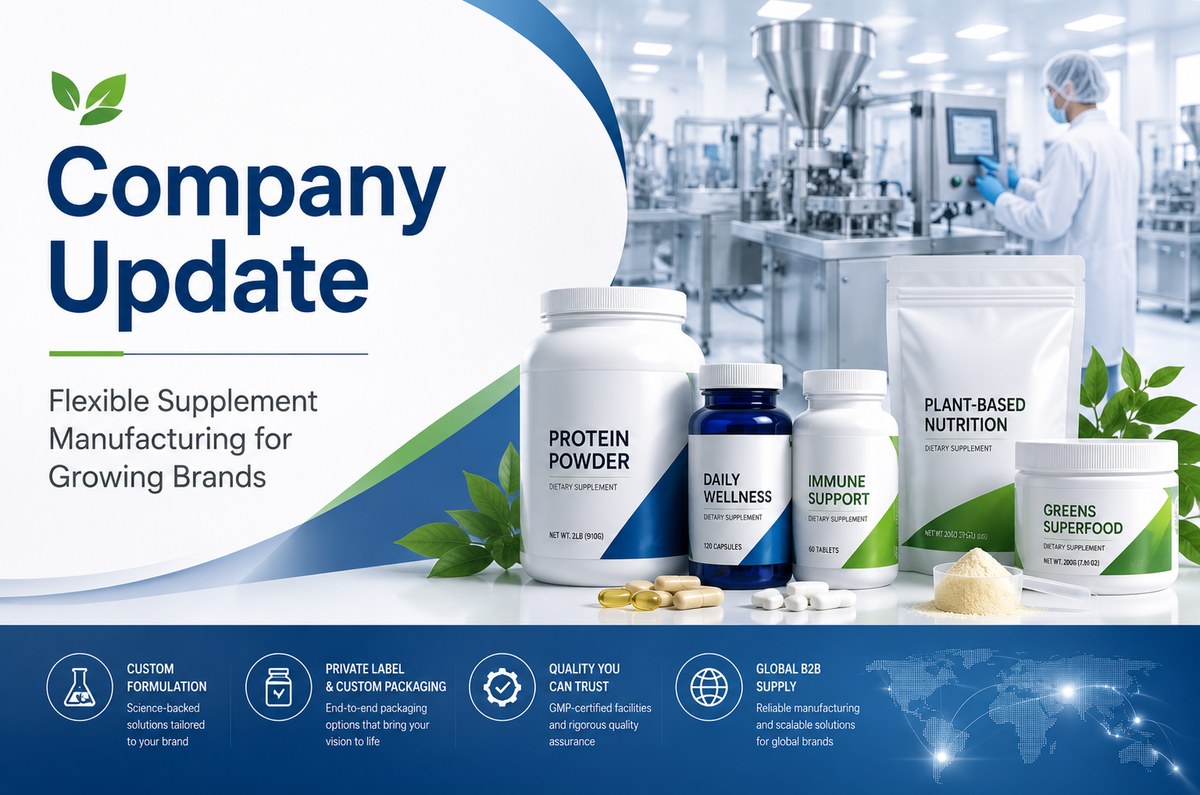
This guide explains the difference between private label supplements and custom supplements, helping brands choose the right manufacturing path.
Choosing the Right Product Development Path
Supplement brands often face a key decision at the beginning of a project: should they launch with private label supplements or invest in a custom formula? The answer depends on business goals, timeline, budget, target market, and the level of differentiation required.
Both models can be successful when matched with the right strategy.
Private Label Supplements
Private label supplements use existing formulas that can be packaged and sold under your own brand. This option is suitable for fast market entry, product testing, and catalog expansion.
It can reduce development time and simplify the early launch process. Brands can usually customize labels, packaging, and certain presentation details while using a mature formula.
Custom Supplements
Custom supplements are developed around a formula created for a brand's specific needs. This may include ingredient selection, dosage levels, flavor, color, format, packaging, and claim positioning.
Custom development is better for brands that need unique products, stronger market differentiation, or formulas designed for a specific consumer group.
Cost, Timeline, and Differentiation
Private label is usually faster and more cost-efficient at the beginning. Custom supplements require more development work but can create greater long-term brand value.
A practical strategy is to use private label products for fast testing, then invest in custom development once the brand understands its customers and market position.
How a Manufacturer Can Help
A reliable OEM/ODM manufacturer can help compare both options, explain MOQ and lead time, recommend dosage forms, support packaging, and provide production and quality-control guidance.
The goal is not simply to make a product, but to help the brand build a product line that can grow.
admin
Recent Posts
2026 Supplement Manufacturing Trends: What Brands Need to Know