Private Label Supplement MOQ in China for New Brands
-
 Yukang Medicine Content & Manufacturing Team
- 27th October 2026
A practical buyer guide to formula choice, packaging minimums and first order planning

Product brief, sample review and packaging alignment help establish a commercially practical MOQ.
What this guide answers
New supplement brands often begin with a simple question: “What is your MOQ?” The useful answer is more specific. Minimum order quantity changes with the dosage form, formula, packaging components, customization level and target-market requirements. This guide explains how to evaluate MOQ in a way that supports a commercially realistic first launch, rather than selecting a quantity only because it appears low.
Quick answer
| Question | Practical answer |
| Is there one standard MOQ? | No. MOQ is set after the formula, dosage form, packaging and project specifications are reviewed. |
| What is the practical starting point? | For many standard private label projects, YKNatura’s published starting MOQ is from 1,000 units per SKU. Final quantities can change by project. |
| What normally raises MOQ? | Full custom formulas, new flavors, specialty ingredients, custom bottles, printed pouches, cartons and multiple SKU variations. |
| What helps a new brand start leaner? | One hero SKU, a ready-to-customize formula, standard packaging and clear approval of the sample before printed components are ordered. |
What MOQ means in supplement manufacturing
MOQ means the minimum commercial quantity a factory can manufacture and package under an agreed specification. It is not simply a sales threshold. A production run needs formula preparation, line setup, quality checks, filling, packaging and documentation. The economic minimum for that work changes from project to project.
The most important point for first-time buyers is that finished-product MOQ and packaging MOQ may be different. A factory may be able to fill a certain number of bottles, while the selected label, pouch film, carton, cap or specialty bottle has its own purchasing minimum. Asking only “Can you make 500 bottles?” can leave the real cost and inventory position unclear.
The four factors that determine MOQ
1 Dosage form and process
Capsules, powders, gummies, tablets, softgels and liquids use different equipment, preparation steps and quality controls. A standard capsule project may be operationally different from a flavored gummy or liquid drop project, even when both use the same retail bottle count. Gummies and flavored powders often require additional work around flavor, texture, processing and stability. Liquids add formula compatibility, pH, filling volume and dropper or closure considerations.
Explore YKNatura’s private label capsule manufacturing, private label gummy manufacturing and private label powder manufacturing pages to compare the basic product routes.
For a concrete product-page example, see the Private Label Probiotic Gummies page. It illustrates how flavor, format and packaging choices can become part of the final project brief.
2 Formula status and customization depth
A ready-made formula with a brand label is usually the most direct private label route. Light customization may change the serving size, capsule count, flavor, bottle count or selected ingredients. A fully custom formula may require formula review, raw-material sourcing, feasibility checks, sample development and more purchasing coordination. The greater the change from an established production specification, the more likely the minimum volume and development timeline need to be reviewed individually.
3 Packaging components
Packaging should be specified early. A standard stock bottle with a custom pressure-sensitive label is usually more flexible than a new bottle mold, printed pouch film, premium carton or special finish. The production quote should identify each component: bottle or pouch, closure, seal, label, carton and master case. This helps the buyer understand whether quantity limits come from product manufacturing, packaging procurement or both.
4 Quality documentation and target market
The same product concept can require a different project plan depending on where it will be sold and what documentation is requested. Brands should tell the manufacturer their target market early, then confirm the product specification, label responsibility, testing scope and documentation needs in writing. This is especially important for brands selling through distributors, marketplaces or regulated retail channels.

Packaging format, component selection and label dimensions should be agreed before final MOQ is confirmed.
Private label vs light customization vs full custom formula
| Route | Best suited to | MOQ effect | Planning focus |
| Ready-made private label | A first market test or a brand that wants to move quickly | Usually the most accessible starting route | Choose a proven product format, standard pack and own-label presentation |
| Light customization | A brand with a clear positioning but limited first-run risk | May increase MOQ depending on the change | Confirm exactly what is changing: flavor, count, capsule shell, packaging or selected ingredients |
| Full custom formula | A brand with validated demand or a differentiated product brief | Often requires a higher project-specific MOQ | Complete formula review, samples, raw-material feasibility and final packaging plan |
For a broader explanation of how these manufacturing models differ, read YKNatura’s guide to Private Label, OEM and ODM supplement manufacturing.Read the guide.
How to reduce first order risk
A lower MOQ can be useful, but it is not the only measure of a sensible first order. A very small run can carry a higher unit cost, fragmented packaging purchases or freight that is inefficient for the destination. A better question is: “What launch configuration gives us a manageable inventory position without compromising the agreed specification?”
- Start with one hero SKU instead of launching several products at once.
- Use a ready-made or lightly customized formula when the first objective is demand validation.
- Select standard bottles, lids and label dimensions where they fit the brand concept.
- Avoid launching multiple flavors, pack sizes or label versions before a core SKU is proven.
- Ask whether the MOQ is per SKU, flavor, formula, label design or production batch.
- Request a quotation that separates product, packaging, sample, testing and freight assumptions.
- Approve the sample and label content before printed packaging is produced.
A practical first order plan with YKNatura
YKNatura, operated by Yukang Medicine (Guangzhou) Co., Ltd., supports private label and OEM/ODM projects across capsules, gummies, powders, tablets, softgels and liquid formats. The company publishes a starting MOQ from 1,000 units, with the final MOQ confirmed after product and packaging requirements are reviewed. Its website describes in-house formulation and quality-control support, plus sample evaluation and production services for global brands.

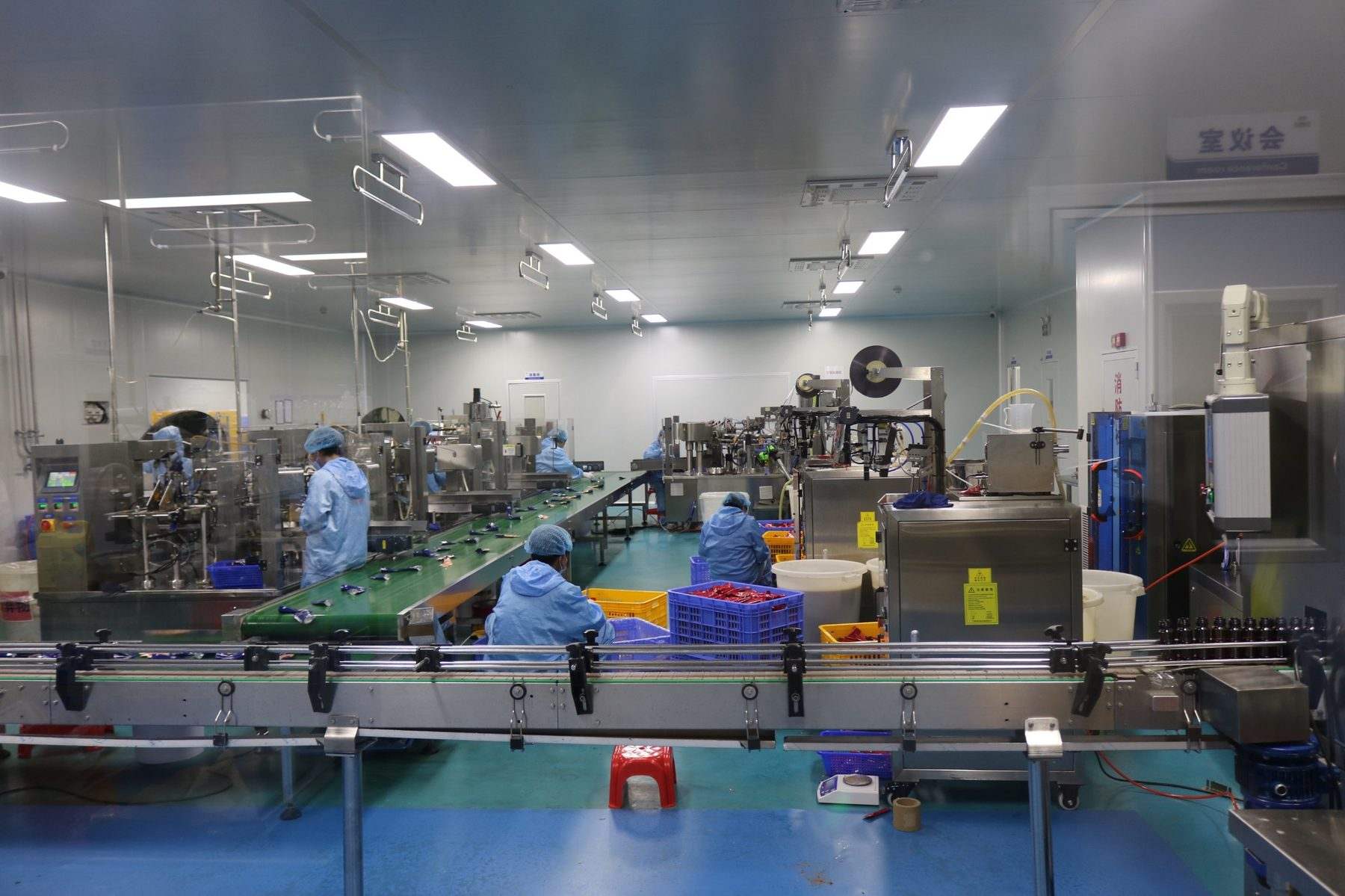
Production readiness includes in-process quality checks, finalized components and an approved specification.
Recommended order of decisions
- Choose the target market and sales channel.
- Choose one product format and one core product concept.
- Decide whether a ready-made, lightly customized or fully custom formula is appropriate.
- Confirm serving size, bottle count, flavor and packaging format.
- Review the sample and label requirements.
- Confirm MOQ, price tier, timeline, documentation and shipping plan in one written quotation.
Brands planning a new product can also use YKNatura’s How to Launch a Supplement Brand From an Idea guide to map formula, samples, packaging and production in sequence.
Questions to ask before accepting an MOQ quote
- Is the MOQ per SKU, per flavor, per formula, per label design or per production batch?
- Does the quotation include the bottle or pouch, cap, seal, label, carton and master case?
- Is this a stock formula, a light customization or a fully custom formula?
- Which packaging components have a separate procurement minimum?
- What samples and approvals are required before bulk production?
- Which quality documents and tests are included in the quotation?
- Can the quantity be split across compatible SKUs or packaging designs?
- What is the production timeline after sample and packaging approval?
- What target-market or label requirements should be reviewed before printing?
Frequently asked questions
What is the MOQ for private label supplements in China?
There is no universal MOQ. For many standard private label projects, YKNatura publishes a starting MOQ from 1,000 units per SKU. The final requirement depends on dosage form, formula, packaging and customization.
Can I start with a stock formula and customize later?
Yes. Many new brands use a ready-made or lightly customized product for a first launch, then develop a more differentiated formula after they have sales data and market feedback.
Why can gummy MOQ be different from capsule MOQ?
Gummies use a different production process and may involve flavor, color, shape, coating and stability considerations. Customization can change the minimum practical production quantity.
Does a custom label have its own MOQ?
It can. Label printers, cartons and printed pouches may each have separate minimums. Ask for product MOQ and packaging MOQ to be shown separately in the quotation.
What information should I send for an accurate MOQ assessment?
Share your target market, product format, desired formula or reference product, serving size, pack size, expected quantity, preferred packaging and required documentation.
Conclusion
MOQ should be treated as a product-planning decision, not a standalone number. The most practical first order usually starts with a clearly defined market, one focused SKU, an appropriate level of customization and packaging that fits the launch plan. When formula, packaging and documentation are reviewed together, a brand can compare quotations more accurately and avoid committing to inventory that does not match its sales strategy.
For a project-specific review, visit YKNatura Private Label Supplement Manufacturing and submit the product format, target market and packaging brief.
Editorial transparency
This guide is written by the Yukang Medicine Content and Manufacturing Team for B2B supplement buyers. It is educational information, not regulatory, legal or medical advice. Final formulation, label and market-entry responsibilities should be confirmed for the intended country before commercial sale.
Relevant YKNatura pages referenced in this guide: Home and private label services; Capsules; Gummies; Powders; Private Label vs OEM vs ODM; and How to Launch a Supplement Brand From an Idea.
Yukang Medicine Content & Manufacturing Team
Latest Supplement Manufacturing Insights
How to Evaluate a China Supplement Manufacturer Before You Order
Capsules Gummies Powders and Softgels Guide for Supplement Brands