From Approved Sample to Finished Supplement Order: A Step by Step Guide for Private Label Brands
-
 Yukang Medicine Content & Manufacturing Team
- 11th November 2026
How to Create Your Own Supplement Brand
A practical guide from product idea to first production run

Creating a supplement brand is a series of product, packaging, and production decisions. The first brief matters more than most founders expect.
A quick answer
Creating your own supplements does not mean building a factory. Most new brands work with a private-label, OEM, or ODM manufacturer that helps turn a product brief into a finished product under the brand’s own name. The work still needs to be led by the brand: choose the customer, product format, formula direction, packaging, market, and budget before asking a factory for a quote.
The strongest first projects are usually not the most complicated ones. They are the ones where the founder knows who the product is for, why that format fits the customer, what needs to be customized, and which decisions can stay standard for the first launch.
What creating your own supplement actually means
A supplement brand is more than a label on a stock bottle. You are making a commercial product decision: what the customer will take, how much they will take, how it will be packaged, what information is printed, and where it will be sold. A manufacturer can support formula development, samples, filling, labels, cartons, and production. The brand still needs a clear brief and a realistic plan.
There are three common starting routes. Choosing the right one early keeps the first quote and sample discussion practical.
| Route | A practical fit | What the brand still decides |
| Private label | You want to start from an established product concept and put it under your own brand. | Target market, product count, packaging, label, and the final commercial terms. |
| OEM | You already have a defined formula, ingredient list, or reference sample. | The exact specification, formula ownership, packaging, and approval process. |
| ODM | You have a product direction but need more help shaping the formula and finished presentation. | Customer, product goal, budget range, target market, and final approvals. |
1 Start with the buyer not the ingredient list
Before selecting ingredients, describe the person who will buy the product. Are you building a daily wellness product for online shoppers, a sports nutrition item, a beauty-focused range, or a distributor product for a specific retail channel? The answer affects price expectations, format, serving size, packaging, and the words that can appear on the label.
A useful first brief answers five ordinary questions: Who is this product for? What everyday use does the format need to fit? Where will it be sold? What price range are you aiming for? What would make the product worth choosing over an existing option?
Avoid starting with a long list of trendy ingredients. A product that tries to do everything can become difficult to taste, package, explain, and price. A clear first product is often easier to sample, launch, and improve in the next SKU.
2 Choose a format that works for the product and the customer
Gummies, capsules, tablets, powders, and liquids are not interchangeable containers. Each format changes what the formula can hold, how the customer uses it, what it costs to package, and what needs to be checked during production.
| Format | Usually a good starting point when | Early questions to ask |
| Gummies | Taste and a chewable experience are central to the product idea. | How many gummies per serving? Pectin or gelatin? Flavor, shape, sugar level, and bottle count? |
| Capsules | You want a simple, familiar format for powdered ingredients. | Can the serving fit in the preferred capsule count and size? Vegetarian or gelatin shell? |
| Tablets | The formula can be pressed into a stable tablet and the brand wants a compact format. | Swallow or chewable? Coating, tablet size, flavor, and count per bottle? |
| Powders | A larger serving or flexible drink format makes sense. | Jar, pouch, or stick pack? Serving scoop, flavor, mixability, and fill weight? |
| Liquids | The concept needs a ready-to-drink, shot, or dropper format. | Bottle size, fill volume, flavor, closure, and storage requirements? |
Explore YKNatura’s private-label gummy supplements if a chewable format is central to your concept. For a broader starting point, use the supplement product formats page to compare capsules, tablets, powders, liquids, softgels, and drops.
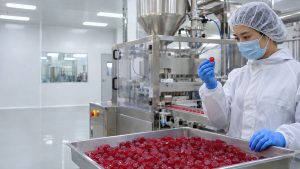
Suggested image placement: a controlled production review helps show readers that format and production detail matter. Replace with an original YKNatura factory photo whenever available.
3 Turn the idea into a product brief a factory can quote
A good brief does not need to be technical. It needs to be specific enough that a manufacturer can tell you what is practical. A vague request such as “I need an energy gummy” can produce very different quotes. A useful brief states the format, preferred ingredients, serving size, expected quantity, packaging direction, target market, and any ingredients or materials you do not want.
- Product idea and intended customer
- Preferred format and a reference product if you have one
- Ingredients you want included and ingredients you want excluded
- Target serving and units per day
- Flavor, color, or sensory direction when relevant
- Bottle, pouch, stick-pack, or carton preference
- Target country or region
- Estimated first-order quantity and expected launch window
For example, a sports nutrition brand may ask for a pectin gummy concept with a target serving, fruit flavor direction, a 120-count bottle, and a U.S. market label plan. That is a starting point for review. It is not a final promise that every ingredient amount will fit in the chosen gummy size. The factory still needs to check feasibility.
A live product example is the private-label creatine gummies page. It shows how serving size, gummy count, flavor, bottle count, and packaging can be described as one product concept.
4 Decide what should be custom and what can stay standard
Customization is useful when it supports the brand strategy. It becomes expensive and slow when every part changes at once. A new brand can often test the market faster by choosing a standard bottle and label size, then putting its effort into the formula direction, product positioning, and clear package design.
A more customized project may make sense when the brand has a defined formula, a specific target market, a retail requirement, or a packaging feature that matters to the consumer experience. The key is to decide which part of the product needs to be distinctive and which parts do not.
| Decision area | Standard first launch | More customized route |
| Formula | Adapt an established product direction. | Develop a formula around specific ingredient and serving requirements. |
| Packaging | Use an available bottle or pouch with a standard label size. | Choose custom bottle, carton, stick-pack, or unusual pack configuration. |
| Timing | Fewer material and approval decisions. | More review, sourcing, and proofing steps before production. |
| Best use | Testing a clear product idea with manageable complexity. | Building a signature product or meeting a defined channel requirement. |
5 Review the manufacturer as carefully as the formula
A factory website can tell you what a company says it offers. It should not replace supplier qualification. Ask questions that connect to your actual product. Which facility will make this format? Is any step outsourced? Which testing and documents are included in this quotation? What does the listed MOQ mean for this exact formula and packaging? Who owns the formula and artwork after development?
YKNatura publishes private-label and OEM/ODM support across gummies, capsules, tablets, powders, liquid supplements, drops, and softgels. Its site also publishes ISO 22000, HACCP, FDA facility registration, HALAL, BRCGS, and other qualification information. For any supplier, ask to verify the certificate holder, scope, validity, facility address, and relevance to your product before relying on a logo alone.
| What to review | A useful buyer question | Why it matters |
| Format capability | Can you make this exact format and packaging at the proposed quantity? | The right facility and process may differ by dosage form. |
| Project documents | Which finished-product documents and testing are included? | A raw-material paper and a finished-product document are not the same thing. |
| Commercial scope | What is included in the quote, and what may cost extra? | Formula work, samples, printed components, and freight may be separate items. |
| Change control | What happens if we change dose, flavor, artwork, or packaging? | Small late changes can affect sample work, materials, and the schedule. |
For a deeper supplier checklist, read How to Evaluate a China Supplement Manufacturer Before You Order before comparing quotations.
6 Samples are for decisions not just for photos
A sample gives your team something concrete to judge. It can help you review taste, color, shape, capsule size, powder feel, bottle fit, label size, or another part of the product experience. Decide in advance what you are approving. “Looks good” can mean different things to a founder, designer, factory, and buyer.
Keep a simple approval record. State the sample version, what was approved, what still needs to change, and whether the sample represents the final commercial formula. This avoids a common first-order problem: a team approves the feel of a sample but later assumes the packaging, serving count, or label wording was also approved.
If you are still deciding between two common formats, read Private Label Capsules and Tablets MOQ Samples Packaging and Lead Time Explained before requesting a sample plan.

Suggested image placement: packaging components and label layout should be reviewed as a complete system before production. Replace with an original YKNatura project photo whenever available.
7 Packaging and labels need their own approval step
The bottle, cap, seal, label, carton, and outer shipping box are not decoration added after the formula is finished. They protect the product, carry required information, and affect how the customer sees the brand. A bottle needs to fit the selected count. A label needs an accurate print area. A carton needs the final bottle dimensions. A pouch or stick pack needs a confirmed fill amount and film layout.
Complete the label review before printing. The final file should include the product name, ingredient declaration, serving information, warnings, net contents, barcode location, lot and date area, and any market-specific wording. Local legal and regulatory review is still important; a manufacturer can support the product information, but the brand should understand its final market obligations.
For a powder project, see the private-label electrolyte powder page. It is a helpful reference for thinking about stick packs, pouches, serving size, and finished packaging.
8 Build a realistic first production timeline
The right question is not simply, “How fast can you make it?” The better question is, “Which decisions and materials must be ready before production can start?” The schedule usually depends on formula approval, ingredients, packaging components, print files, order quantity, production availability, and shipping arrangements.
| Stage | Brand action | Factory action | Typical issue |
| Brief review | Share format, target market, quantity, and product direction. | Review formula and packaging feasibility. | The request is too broad to quote accurately. |
| Sample stage | Approve or revise the sample against clear criteria. | Prepare and adjust the sample where appropriate. | A sample is approved without confirming the version. |
| Production approval | Lock formula, packaging, artwork, and commercial details. | Plan materials and schedule the project. | Bottle, label, carton, or serving count is still open. |
| Bulk production | Confirm changes only through the agreed process. | Produce, pack, and complete agreed checks. | Late artwork or formula changes interrupt the plan. |
| Shipment | Provide collection and destination details. | Prepare cartons and agreed documents. | Freight information arrives after goods are ready. |
YKNatura states that samples are typically available in 7 to 10 days and standard production is generally around 15 days once formula, packaging, and files are approved and ready. Treat those figures as project-planning references. Custom packaging, special ingredients, complex labels, and destination requirements can change the actual timeline.
9 What to check before you place the first purchase order
- Final formula and serving size are written down
- Product format, count per container, and pack size are confirmed
- Bottle, pouch, cap, seal, label, carton, and shipping carton plan are agreed
- Final artwork has been reviewed for the target market
- MOQ, unit price basis, sample cost, payment terms, and lead-time assumptions are clear
- Testing, COA, or other agreed documents are named in the project scope
- Formula ownership, label artwork rights, and confidentiality expectations are clear
- Freight method, delivery point, and forwarder instructions are planned
This list is not meant to slow a project down. It lets the brand and factory work from the same product version. It also gives a new founder a practical way to compare two quotes that may look similar but include different formulas, packaging, documents, or services.
Frequently asked questions
Can I create a supplement brand without a custom formula
Yes. Many brands start with an established product direction and customize the brand, packaging, or selected product details. A custom formula can be explored when the market position and budget justify it.
What is the best format for a first supplement product
There is no single best format. Start with the serving size, target customer, use occasion, taste expectations, and packaging plan. A manufacturer can then review which format is practical.
How much does it cost to create a supplement
Cost depends on the formula, ingredient levels, format, order quantity, packaging, testing, and freight. Ask for a quote based on a clear product brief rather than a generic product name.
What MOQ should I expect
MOQ depends on the formula and packaging. Some YKNatura product pages state starting quantities from 1,000 units, but the written MOQ should always be confirmed for the actual SKU.
Do I need a sample before ordering
A sample is useful when the formula, taste, format, or packaging needs evaluation. Confirm the sample scope, cost, timing, and approval criteria before starting.
Can a manufacturer handle labels and packaging
Manufacturers may support bottles, labels, cartons, pouches, stick packs, and other packaging options. The brand should still approve the final artwork and market-specific wording before print.
What documents should I request
Ask which product specifications, certificates, COA, testing reports, batch records, or other documents apply to your specific project. The answer depends on the format, market, and agreed testing plan.
When should I choose a freight forwarder
Discuss shipping during the production-planning stage, not after production is complete. Your forwarder may need carton dimensions, weight, pickup timing, and destination details before booking.
Start with a clear brief
You do not need every answer before the first conversation with a manufacturer. You do need enough detail to make the conversation useful. Start with your customer, product format, ingredient direction, packaging idea, target market, estimated quantity, and launch window. The right partner can then help identify the open questions before they become delays.
To discuss a new private-label, OEM, or ODM supplement project, visit YKNatura Contact Us or email marketing@collagenyoung.com.
Yukang Medicine Content & Manufacturing Team
Latest Supplement Manufacturing Insights