Electrolyte Powder or Collagen Drink Choosing the Format Before You Build the Formula
-
 Yukang Medicine Content & Manufacturing Team
- 21st November 2026
A practical guide for private label supplement brands deciding what customers will actually use
By YKNatura Manufacturing and Product Development Team | Updated November 2026
A product can look great on a mood board and still miss the mark in real life. That usually happens when the team starts with a long list of ingredients and chooses the format later. For a hydration product, a stick pack mixed into a water bottle may be the whole point. For a beauty-led collagen product, a small ready-to-drink bottle may be what makes the product feel easy enough to use every day. This guide helps brand teams make that decision before they spend time revising a formula, label, or quote.
The short version is simple. Pick the use moment first. Then build the formula, flavor, pack size, and price around that moment. There is no universal winner between powder and liquid. There is only a better fit for the customer you want to keep.
Start with the moment not the ingredient list
We often receive briefs that begin with a list: magnesium, sodium, collagen peptides, hyaluronic acid, vitamin C, flavor ideas, maybe a target claim. That information matters. But it does not answer the practical question that drives a repeat purchase: when will someone reach for this product?
A runner opening a hydration stick after a workout has a different routine from a customer taking a beauty supplement before work. One person already has a water bottle nearby. The other may want a finished serving that requires no mixing at all. Those habits affect almost every decision that comes next, including serving size, flavor intensity, packaging, shipment weight, and the price the customer will accept.
Two products can both be supplements and still be very different businesses
It is tempting to compare products by headline ingredient alone. That is how a buyer ends up comparing an electrolyte stick pack with a collagen drink as if they were interchangeable. They are not. They solve different parts of a customer routine.
When electrolyte powder makes sense
Electrolyte powder usually works best when mixing the product is part of the experience. The customer adds a stick, sachet, or scoop to water, shakes it, and drinks it during training, travel, a long workday, or an outdoor activity. The water bottle is already in the picture, so the extra step does not feel like a burden.
That format gives a brand room to think about the details that actually affect daily use: how much water the serving is designed for, whether the first sip tastes too salty, whether the powder disperses cleanly, and whether the pack fits into a gym bag or desk drawer. A good brief does not just say “make an electrolyte product.” It says something like “a low-sugar citrus stick pack for 500 mL of water that should taste clean after a hard workout.” That is a usable direction for product development.
For brands building that kind of routine, our private label electrolyte powder manufacturer page explains the available direction for custom powder formulas and formats such as stick packs, sachets, pouches, tubs, and retail cartons. It is a better starting point than copying a competitor label line by line.
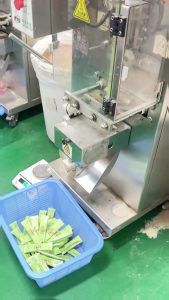
Figure 1. Real factory footage of powder being prepared for single-serve packing. Source: YKNatura original production footage.
What has to work before a customer buys the second box
With powder, “the formula” is only part of the job. Mineral-rich products can become difficult to drink if the flavor and sweetness are not handled carefully. Some ingredients bring bitterness, saltiness, or a chalky finish. A sample that looks good on paper can still disappoint when it is mixed in the amount of water a normal customer actually uses.
That is why product sampling should be practical. Mix it in the water volume printed on the pack. Try it cold and at room temperature. Let someone who did not write the formula taste it. Ask whether they would finish the glass after a workout, not whether they can identify the flavor note. Small observations at that stage can save a brand from ordering packaging for a product people use once and forget.
When a collagen drink makes sense
A liquid collagen drink works differently. The customer opens the bottle, drinks a finished serving, and moves on. That convenience can be a strong part of the value, especially for a beauty or wellness brand that wants a more premium daily ritual. It also creates a more complete product experience: bottle shape, serving size, flavor, mouthfeel, label design, and the way the product looks in a refrigerator or on a vanity can all matter.
The tradeoff is that a liquid product asks more of the development and packaging process. You need to consider the formula in a ready-to-drink format, flavor stability over time, the bottle and closure, transport weight, and the finished cost per serving. None of those points make liquid a bad choice. They simply mean the brand should choose it because it supports the customer experience, not because it seems more impressive than powder.
If the customer should be able to pick up a compact finished serving with no shaker and no water nearby, start with the private label collagen drink manufacturer page. It is designed for brands that want to discuss formula direction, flavor, bottle, label, and final packaging as one connected product decision.

Figure 2. Real production equipment during a controlled filling and packaging run. Source: YKNatura original production footage.
The honest comparison is not powder versus liquid
The real comparison is customer routine versus customer routine. Powder often wins when portability, flexible water use, and a lower shipping burden matter most. Liquid can earn its place when immediate convenience and a premium ready-to-drink experience are central to the brand. A quote should reflect that difference rather than hide it.
For example, imagine a small U.S. brand selling hydration products through a running community. Its customers already carry bottles and care about packability. Individual sticks may make sense because the product travels well and the user controls the water. Now imagine a beauty-focused brand that wants one simple morning step. A small collagen drink may fit the story better because there is no mixing, measuring, or cleanup. Both can be sensible launches. They just need different budgets and different expectations.
A quick format comparison
Use this as a conversation starter, not a scorecard. The better choice is the one that matches the routine your customer will actually keep.
| Decision point | Electrolyte powder | Collagen drink |
| Typical use moment | Mixed into water during training, travel, outdoor activity, or a long day. | A ready-to-drink daily beauty or wellness routine. |
| Customer action | Adds to water, shakes, and drinks. | Opens the bottle and drinks a finished serving. |
| Common pack path | Stick pack, sachet, pouch, or tub. | Single-serve bottle, closure, and retail carton. |
| Development focus | Taste, dispersion, and stated water volume. | Flavor, mouthfeel, stability, and bottle compatibility. |
| Commercial reality | Usually lighter to ship; the customer supplies the water. | Heavier to ship; convenience and presentation need to earn their cost. |
Do not compare quotes until the products are actually comparable
A low quote can look attractive for the wrong reason. Perhaps it assumes a different serving size, a simpler pack, a stock flavor, a different bottle, or less work on formulation. That does not make the quote dishonest. It means the briefs are not the same yet.
Before asking several manufacturers to price a concept, write down the decisions that change the result. You do not need a technical report. A clear one-page brief is often enough: who the product is for, when it will be used, the format, approximate serving size, preferred flavor direction, packaging idea, target sales market, and the first order quantity you are considering. If something is undecided, say so. A reliable manufacturer can help narrow the options, but cannot make a useful comparison from a vague request.
What makes an early quote more useful
| Put this in the first brief | Why the manufacturer needs it |
| Customer and routine | It keeps the format and flavor discussion tied to a real use moment instead of a generic ingredient list. |
| Serving and pack format | A 7 g hydration stick, a tub, and a 50 mL drink are not interchangeable cost models. |
| Flavor direction | “Clean citrus” and “sweet tropical” create different sample expectations. |
| First market and label plan | Requirements and claim language can differ by country. |
| Likely first order quantity | It lets the supplier discuss practical packaging and production options rather than guess. |
Seven questions to answer before you ask for samples
- What routine should this product fit: workout, travel, desk drawer, morning beauty ritual, or something else?
- Will the customer be happy to add water, or is an open-and-drink serving essential?
- What is the normal serving moment, and how much time does the customer realistically have?
- What does a good flavor mean for this product: light and refreshing, fruit-forward, creamy, or almost neutral?
- Which packaging is part of the promise: stick packs, a tub, a 50 mL bottle, a larger bottle, or another format?
- What retail price range needs to work after packaging, freight, marketplace fees, and margin are considered?
- Which market will the product enter first, and what labeling or claim review will that market require?
A practical way to use the first sample round
Do not treat the first sample as a final verdict. Treat it as a way to learn where the product becomes real. For an electrolyte powder, test the mix in the stated water volume and ask whether the flavor stays pleasant through the last few sips. For a collagen drink, test the serving at the temperature and time of day customers are most likely to use it. Record what feels off: too sweet, too salty, too thick, not enough flavor, awkward pack size, or a bottle that does not match the price point.
The most useful feedback is specific. “We do not like it” leaves too much guesswork. “The citrus note is good, but the aftertaste is too strong at 500 mL” gives the development team something they can work with. The same is true for packaging. A bottle can be high quality and still feel wrong for the brand. A stick pack can be convenient but too large for a small handbag. Those details are not cosmetic. They are part of whether a customer returns.

Figure 3. Real capsule processing equipment in operation. Source: YKNatura original production footage.
What brands should expect from a manufacturing partner
A manufacturer should be able to help turn a commercial idea into a buildable product. That normally means discussing ingredient compatibility, taste direction, packaging options, samples, production timing, and the information needed for labeling review. It does not mean the manufacturer should tell a brand to make unsupported health claims or skip market-specific requirements.
At YKNatura, the conversation usually begins with the customer use moment and the desired finished format. From there, the product team can work through a custom formula direction, raw material sourcing, sampling, manufacturing, and finished packaging. The goal is not to push every concept into the same format. It is to make sure the format supports the business plan.
The format should make repeat use easier
The best decision is rarely the one with the longest ingredient list or the flashiest package. It is the one that fits naturally into the life of the person buying it. If your customer wants to refill a bottle at the gym, a well-designed electrolyte powder may be the better product. If your customer values a finished daily serving with no mixing, a collagen drink may be worth the added complexity.
Choose the routine. Build the format around it. Then make the formula, flavor, packaging, and quote answer the same brief. That is how a private label product starts to feel like a brand rather than a collection of ingredients.
Talk with our product team
Planning an electrolyte powder, collagen drink, or another custom supplement format? Start with the product experience you want customers to have. Explore our custom electrolyte powder options or our collagen drink development options, then contact YKNatura at marketing@collagenyoung.com or WhatsApp +86 18988857009 to discuss your brief.
Yukang Medicine Content & Manufacturing Team
Latest Supplement Manufacturing Insights