Private Label Lactase Enzyme Tablets: What Brands Should Decide Before They Ask for a Quote
-
 Yukang Medicine Content & Manufacturing Team
- 19th November 2026
A lactase tablet can look like one of the simpler supplement products to launch. It is often a single active ingredient, a small bottle, and a familiar use case. Then the first two supplier quotes arrive. One says “250 mg lactase.” Another says “9,000 FCC.” A third gives a tablet count but says little about how the product will hold up in the bottle. Now the comparison is not simple at all.
That is normal. Brands are not buying an enzyme number. They are building a finished product that needs to make sense on a shelf, in a customer’s hand, and in a supplier’s production plan. This guide is for teams that want to ask better questions before they request a quote for private label lactase enzyme tablets.
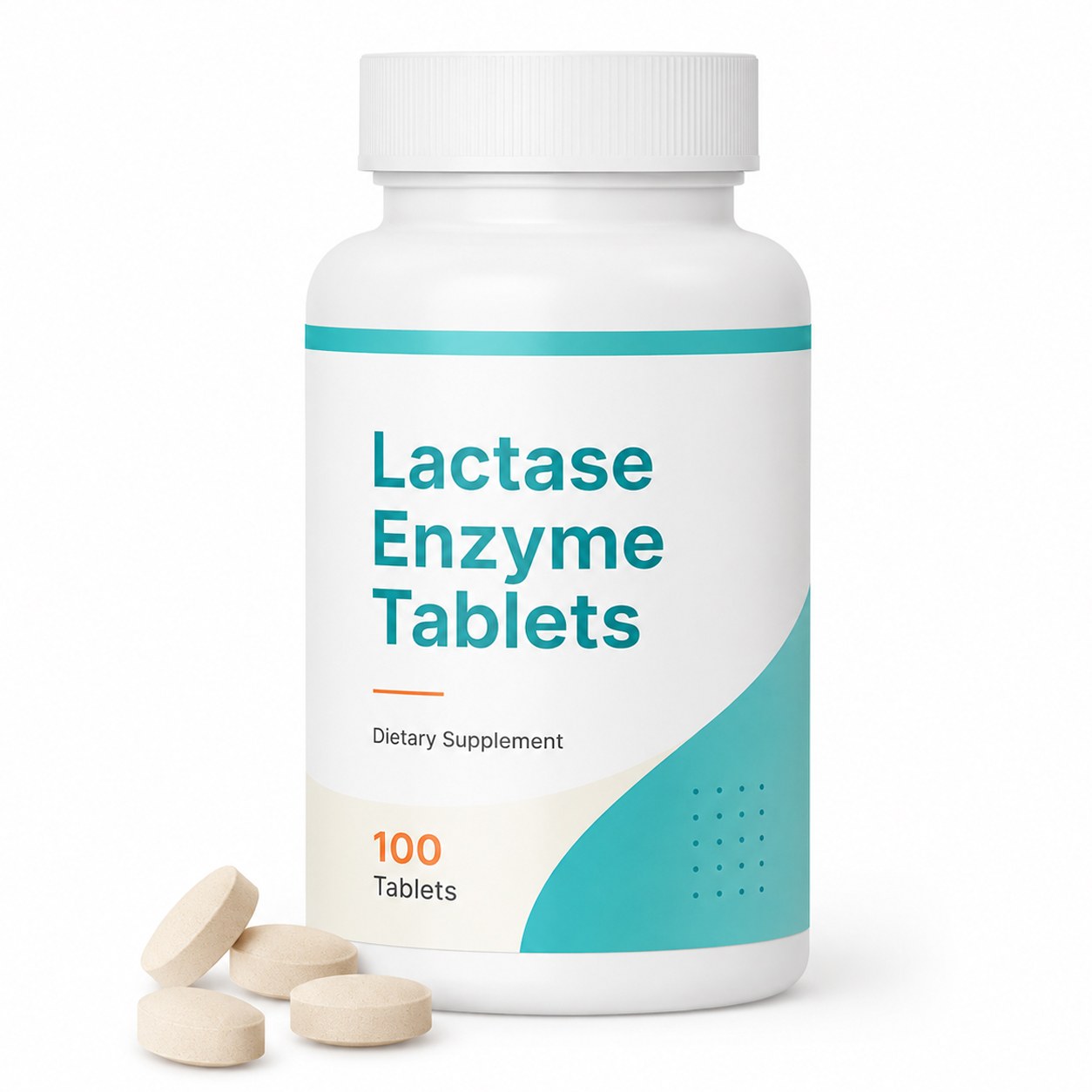
If you are already considering a higher-activity tablet concept, YKNatura’s Lactase Enzyme Tablets 9000 FCC product page shows one starting point. This article explains the decisions that should happen before a concept becomes a formula and packaging brief.
The Number on the Bottle Is Not the Whole Product Brief
The front label might say 3,000, 6,000, or 9,000 FCC. That number matters, but it does not answer every question. A brand still needs to decide whether one tablet is one serving, whether the product should be a swallowable tablet or a chewable, whether the bottle needs added moisture protection, and what documents a buyer will expect before placing a production order.
The easiest mistake is comparing only price per bottle. A less expensive quote can look attractive until you find out that the tablet is larger than expected, the serving is two tablets rather than one, the packaging is not suited to the shelf-life target, or the test specification was never clearly agreed. A clean quote starts with a clean brief.

Real YKNatura production photo. Suggested alt text: “Supplement powder blending in a controlled production room for private label tablet manufacturing.”
First Learn What FCC Is Saying in Plain English
FCC is the activity number used to describe lactase enzyme performance. It is not the weight of the tablet and it is not the same thing as milligrams. Milligrams tell you how much material is present by weight. FCC tells you how much enzyme activity the specification is designed to provide.
Think of it this way: comparing lactase products by milligrams alone is a little like comparing two batteries only by their physical size. You can see the size, but you still do not know what they are designed to deliver. When buyers compare lactase products, FCC makes the comparison more meaningful.
For reference, the Health Canada lactase monograph expresses lactase quantity by activity per dosage unit and treats the milligram amount as additional information. That is a useful way for a buyer to read a specification, even though final labels and permitted claims must be checked for the destination market.
Start With the Customer Moment Not the Enzyme Number
A good development conversation starts with a simple question: when does the buyer expect their customer to use this product? A high-activity tablet in a compact bottle tells one story. A chewable product for a bag or car tells another. A broader digestive enzyme formula tells a third.
Once that customer moment is clear, the rest of the brief gets easier. You can decide whether the product should have one tablet per serving, how many tablets belong in the bottle, how large the tablet can be, and what price position the brand is trying to protect.
Five Decisions That Change the Quote
| Decision | Plain-language question | Why it changes the project |
| Activity level | Do you want 3,000, 6,000, or 9,000 FCC per tablet? | It affects formula cost, label positioning, and whether one tablet can be the intended serving. |
| Format | Should it be a tablet, capsule, chewable, or liquid? | The format changes the user experience, development work, and packaging route. |
| Formula scope | Is this lactase only, or part of a digestive enzyme blend? | A simple single-ingredient concept and a broader blend need different space, claims, and specifications. |
| Packaging | What bottle count and closure fit the product? | Pack size, seal, bottle, cap, and moisture-management choices affect cost and stability planning. |
| Quality plan | Which documents do you need before and after production? | Agreeing on specifications, COA, and testing expectations early prevents a vague order. |
Where a 9000 FCC Tablet Fits
A 9,000 FCC concept can be a sensible choice when the brand wants a simple, high-activity, one-tablet message. It often works well for a customer who wants something portable and easy to understand: one tablet with a dairy-containing meal, rather than a more complicated serving instruction.
That does not make 9,000 FCC the automatic answer. A value-oriented brand may prefer a different format or activity level. A brand developing a multi-enzyme product may decide the formula should be designed around the entire blend instead. The right strength is the one that fits the intended customer, product story, and commercial plan.
Brands that want to use a 9,000 FCC starting point can review the private label lactase enzyme tablet specification and packaging options before requesting a sample discussion.
Same FCC Does Not Always Mean the Same Finished Product
This is the part that is easy to miss when looking at a spreadsheet. Two products can carry the same headline FCC number and still be built differently. Tablet size, excipients, how the tablet breaks apart, manufacturing conditions, packaging, and storage expectations all belong in the development conversation.
That is especially important for enzymes. A tablet has to be made without treating the active ingredient as an afterthought. The product must also be protected through packaging, normal storage, and its intended shelf life. One recent evaluation of commercial lactase supplements found that dosage form and formulation design influenced enzyme availability, not just the label’s FCC figure.
The practical takeaway is simple: ask your manufacturer how the activity target, tablet design, packaging, and stability plan work together. You can also explore YKNatura’s private label supplement formats when a tablet is not the only format under consideration.

Real YKNatura production photo. Suggested alt text: “Operators working on finished supplement packaging in a controlled clean production area.”
A Sample Should Answer More Than Does It Look Good
A sample is a decision tool. It should help the brand check the things that are hard to understand in an email: tablet size, surface finish, color, bottle feel, cap fit, label placement, carton presentation, and whether the serving direction reads naturally.
Before approving a sample, ask to confirm the activity specification, ingredient list, tablet count, bottle and closure, packaging materials, and the documents expected with the production batch. If the product is going to a particular market, this is also the right time to check the label approach with the appropriate regulatory adviser.
The Quality Questions Worth Asking Before You Place an Order
The goal is not to turn a first conversation into a compliance audit. It is to make sure the finished product is defined before production starts. A good private label discussion should cover the agreed finished-product specification and the quality documents needed for the order.
- What is the target lactase activity per tablet and per serving?
- Will the product specification state both the activity and the ingredient information clearly?
- Which finished-product tests and batch documents are expected?
- How will packaging choices support storage and shelf-life expectations?
- What will be approved at the sample stage, and what can still change before bulk production?
- Who signs off on the final label copy and market-specific claims?
For brands that need a different customer routine, lactase can also be considered in a liquid format. See the separate private label lactase enzyme drops page. The point is not to push every project toward one format. It is to choose a format that fits the product idea before the artwork and packaging are locked.
A One Page RFQ Is Usually Enough
You do not need a perfect technical document to begin. A one-page request can be enough when it clearly states the market, desired FCC activity, format, tablet count, bottle preference, target order size, and any documentation needs. That gives a manufacturer enough direction to ask useful follow-up questions and prepare a more meaningful quote.
The best projects rarely begin with “What is your lowest price?” They begin with “Here is what we are trying to launch. What do you need from us to quote it correctly?” That difference saves time for both sides.

Real YKNatura production photo. Suggested alt text: “Finished supplement packaging line used for private label manufacturing projects.”
Frequently Asked Questions
What does 9000 FCC mean in a lactase tablet
It refers to the lactase enzyme activity specified per tablet. FCC is an activity unit, not a tablet weight. It gives buyers a clearer way to compare lactase specifications than milligrams alone.
Is 9000 FCC always better than 3000 or 6000 FCC
Not necessarily. A higher activity level may fit a one-tablet, high-activity concept, while another level may better suit a value-focused product, a different serving plan, or a broader enzyme blend.
Can private label lactase enzyme tablets be customized
A private label project can discuss activity level, tablet format, tablet count, bottle, cap, label, carton, and quality documentation. Final options depend on the approved product specification and order requirements.
What should a buyer confirm before approving a lactase tablet sample
Confirm activity specification, ingredient list, tablet size and appearance, serving direction, bottle count, packaging components, label copy, and batch documentation expectations.
Build the Product Before You Compare the Price
The strongest lactase product brief is not the one with the biggest number on the label. It is the one where the activity level, tablet design, packaging, quality expectations, and customer routine all make sense together.
If you are developing a private label lactase product, start with the Lactase Enzyme Tablets 9000 FCC page and use it as the base for your product brief. A clear starting point makes the sample, quote, and production conversation much easier.
Yukang Medicine Content & Manufacturing Team
Latest Supplement Manufacturing Insights