How to Launch a Supplement Brand From an Idea: Formula, Samples, Packaging and Production
-
 Yukang Medicine Content & Manufacturing Team
- 26th October 2026
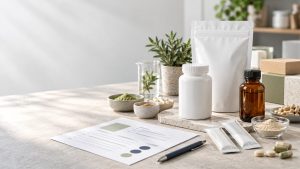
A supplement launch is a connected project: positioning, formula, samples, packaging and production decisions need to line up.
Quick Answer
Launching a supplement brand usually involves seven connected decisions: defining the customer and sales market, choosing a delivery format, selecting a private label or custom formula route, reviewing samples, finalizing packaging and label artwork, confirming production requirements, and planning delivery and reorders. The projects that move smoothly are not necessarily the simplest products. They are the projects where the important decisions are made in the right order.
This guide explains what to decide at each stage, what a manufacturer needs before quoting, and which early choices commonly create delays later.
The Launch Sequence at a Glance
| Stage | The decision to make | What a manufacturer needs from you |
| 1. Product brief | Who is the product for, where will it be sold, and what job should it do for the customer? | Target market, sales channel, product idea and launch goal. |
| 2. Delivery format | Which format fits the formula and customer experience? | Capsule, gummy, powder, softgel, tablet, drops or liquid preference. |
| 3. Formula route | Is an existing formula enough, or does the brand need a custom direction? | Ingredient brief, reference product or must-have / nice-to-have list. |
| 4. Sample review | What must be approved before the product moves forward? | Formula, dosage, sensory requirements, serving size and sample feedback. |
| 5. Packaging | What will protect, present and ship the product? | Bottle, pouch, stick pack, dropper, count, label and carton preference. |
| 6. Production readiness | What is the approved version of the project? | Final formula, artwork, packaging components, quantity and testing scope. |
| 7. Delivery and reorder | How will inventory reach the market, and when should the next order be planned? | Destination, shipping preference, launch window and forecast. |
Start With a Product Brief, Not a Loose Idea
A statement such as “we want to launch a women’s supplement” is a category, not yet a production brief. It leaves open the questions that affect formula direction, dosage form, packaging, price and manufacturing route. A clear brief does not need to be perfect. It needs to be specific enough for the next conversation to be useful.
What to include in your first product brief
- Target customer and use occasion: Who will buy it, and when or how will they use it?
- Target market and sales channel: For example, a direct-to-consumer store, Amazon, retail, distributor or clinic channel.
- Format preference: Capsules, gummies, powders, softgels, tablets, liquid drops or a liquid drink.
- Formula direction: A short ingredient wish list, reference product or product problem you want to solve.
- Commercial parameters: Expected first order quantity, target launch date, price level and packaging preference.
For example, “We need a gut-health product” is still broad. “We are developing a 30-day stick-pack powder for an online wellness brand in Europe, with a clean-label direction and a need for formula evaluation, samples and retail packaging” gives a manufacturing team something practical to assess.
Choose a Delivery Format Before Finalizing the Formula
The delivery format is not simply a packaging choice. It influences how much material can fit in one serving, how the product feels to the customer, how it is packed and which technical questions need to be solved before production.
| Format | Often considered for | Early questions to answer |
| Hard capsules | Vitamins, minerals, botanical extracts, probiotics and multi-ingredient blends. | What is the target fill weight, capsule type, daily count and bottle format? |
| Softgels | Oil-based or liquid-filled supplement concepts. | Is the fill compatible with the shell, and what size, count and packaging are needed? |
| Gummies | Lifestyle-oriented, convenient and taste-led concepts. | Can the desired active amount, flavor, texture and daily serving fit the format? |
| Powders | Protein, collagen, electrolyte, creatine and larger serving-size products. | How should the product taste, dissolve and be packed: jar, pouch, sachet or stick pack? |
| Liquid drops | Botanical, vitamin and other liquid supplement projects. | What fill volume, bottle, closure, dropper and label format are appropriate? |
Explore format-specific considerations for private label capsules, softgels, gummies, powder supplements and liquid drops.
Choose the Right Starting Route: Private Label or Custom Formula?
The best route depends on the stage of the business. A ready-to-customize formula can help a new brand validate demand with fewer early decisions. A custom formula is more appropriate when the brand has a defined ingredient concept, dosage target or positioning that cannot be achieved with an existing option.
| Decision factor | Private label route | Custom formula route |
| Best fit | A brand that wants a faster launch path and a proven format. | A brand with a clear product thesis, distinct ingredient direction or specific dosage target. |
| Early work | Branding, packaging, count, target market and confirmation of the available formula. | Ingredient selection, dosage, format feasibility, sensory work where relevant and packaging. |
| Trade-off | Usually simpler at the start, with less formulation control. | More development work before launch, with more room for differentiation. |
| Useful question | Is speed-to-market more important than changing the core formula? | What must be distinctive for the product to earn its place in the market? |
For a fuller comparison of the two routes, read Private Label and Custom Supplement Manufacturing.
It is worth deciding this early. A project can lose time when a brand begins with a ready-made direction but later changes multiple active ingredients, the serving size and the format. That is not a failure; it simply means the project has moved into custom development and should be planned that way.
Build a Formula That Can Be Made Repeatedly
A formula can look compelling on paper and still be difficult to make in the chosen format. Formula development is not only ingredient selection. It also includes serving size, ingredient form, compatibility, sensory experience where relevant, manufacturability, packaging compatibility and target-market label considerations.
Questions worth resolving before samples
- Can the intended serving size realistically fit into the selected capsule, gummy, tablet, powder or liquid format?
- Will the ingredient combination create a strong taste, odor, color, texture or flow issue that needs to be addressed?
- Does the chosen format match the customer experience: one capsule, two gummies, a scoop of powder, a stick pack or drops?
- Are the must-have ingredients truly essential, or are there alternatives that can make the formula more practical to produce?
- Does the proposed label language need review for the target market before artwork is finalized?
A powder can usually carry a meaningful serving size that would not fit comfortably into a two-capsule serving. A gummy has a different balance of active level, flavor, texture and daily count. A liquid needs consideration around flavor, fill volume, closure and transport. These are manufacturing realities that help shape a viable product rather than reduce its value.

Use Samples to Make Decisions, Not Just to Preview the Product
A sample is not simply a moment to decide whether the product looks good. It is the point at which the brand and manufacturer should align on what the final product needs to be. The approval process is much smoother when feedback is specific and consolidated rather than provided in separate changes over several weeks.
What should be approved before moving forward?
- Final ingredient direction and serving size.
- Product appearance, including color, texture, odor or taste where applicable.
- Daily count, fill amount or unit size.
- Packaging configuration: bottle, pouch, stick pack, dropper or other format.
- Label artwork, ingredient panel and mandatory information for the chosen market.
- Production checks, testing scope and project documents to be discussed for the product.
A good sample shows that a product can be made. A production-ready project requires the brand and manufacturer to agree on what must remain consistent when the order moves to scale. That distinction is especially important for projects involving flavor work, multi-ingredient powders, liquids, gummies and customized packaging.
Lock Packaging Earlier Than Most First-Time Brands Do
Packaging is not the final decoration step. It is part of the production plan. It can affect unit cost, minimum order quantity, label dimensions, filling method, outer-carton configuration, freight planning and the time required before a line can be scheduled.
| Packaging decision | Why it needs an early answer |
| Bottle, pouch, jar or stick pack | The choice affects filling equipment, material sourcing and the customer experience. |
| Unit count or serving count | It changes label content, bottle size, carton configuration and cost. |
| Closure and seal | It influences the finished appearance, protection and applicable packaging components. |
| Label size and artwork | It must match the final container and be approved before label production or application. |
| Carton and shipping arrangement | It affects outer packing, pallet planning and delivery preparation. |
For a powder project, packaging may include jars, pouches or stick packs; explore private label powder manufacturing options.
For liquid projects, bottle capacity, dropper configuration and label format should be discussed early; see private label liquid drops.
Make the Project Production-Ready Before Scheduling Bulk Manufacturing
Before production begins, the project should have one approved version of each key element. This reduces avoidable changes while materials, packaging components and manufacturing time are being coordinated.
Production-ready checklist
- Target market, sales channel and product format confirmed.
- Final formula, serving size and unit count confirmed.
- Sample feedback closed and final specification agreed.
- Bottle, pouch, carton, dropper or other packaging configuration approved.
- Label artwork and ingredient panel approved for the intended market.
- Order quantity, quality discussions, required documents and shipping plan confirmed.
- One shared approval record is available to the brand, manufacturer and packaging stakeholders.
At YKNatura, many standard projects start from an MOQ of 1,000 units. Standard samples are typically prepared in 7–10 days after requirements are confirmed, and standard mass production is generally planned for about 15–20 days once the formula, packaging and artwork are approved. Timing can change with custom bottles, specialty cartons, complex formulas and materials that need longer sourcing. Confirm the schedule for the specific project rather than treating any general timeline as a guarantee.

Choose a Manufacturer You Can Work With After the First Order
The lowest quotation does not always represent the lowest overall cost. A lower unit price can be offset by unclear specifications, late packaging changes, unexpected minimums, poor communication or a product that does not match what the brand approved. Compare quotations only when each supplier is pricing the same assumptions: formula, dosage, format, unit count, packaging, order quantity, testing scope and delivery expectation.
Questions to ask during manufacturer comparison
- Which dosage forms and packaging formats can the factory support for this project?
- Is the quote based on the same formula, quantity and packaging assumptions as other quotations?
- What happens between sample approval and bulk manufacturing?
- Which documents, testing discussions and batch-related records can be provided for this specific project?
- Who will manage formula, artwork, packaging and production communication?
- Can the manufacturer support a future reorder or related product line if the first SKU performs well?
YKNatura supports private label, OEM and ODM projects across hard capsules, softgels, gummies, tablets, effervescent tablets, powders, liquid drops and liquid supplements. The most useful first inquiry includes the target market, preferred format, core ingredient idea, packaging preference and estimated order quantity.
Five Mistakes That Commonly Delay a Supplement Launch
| Common mistake | Why it causes trouble | A better move |
| Starting with a logo before defining the product | Artwork begins before the serving size, container and label information are stable. | Build a product brief, then decide the format and packaging direction. |
| Changing core formula details during sample work | Each change can affect taste, fill weight, production feasibility and cost. | Separate must-have ingredients from nice-to-have ideas before sampling. |
| Treating packaging as a last step | Container and label changes can affect timing, MOQ, cost and production planning. | Choose the pack format early, even if the artwork is still being refined. |
| Comparing factories only by unit price | Two quotations may include different assumptions, materials, packaging or responsibilities. | Compare like for like, then assess communication and project support. |
| Approving a sample without a production plan | The team may agree on the sample but not on what must remain consistent at scale. | Confirm specifications, packaging, checks and documents before production is scheduled. |
How YKNatura Supports a Brand From Idea to Production
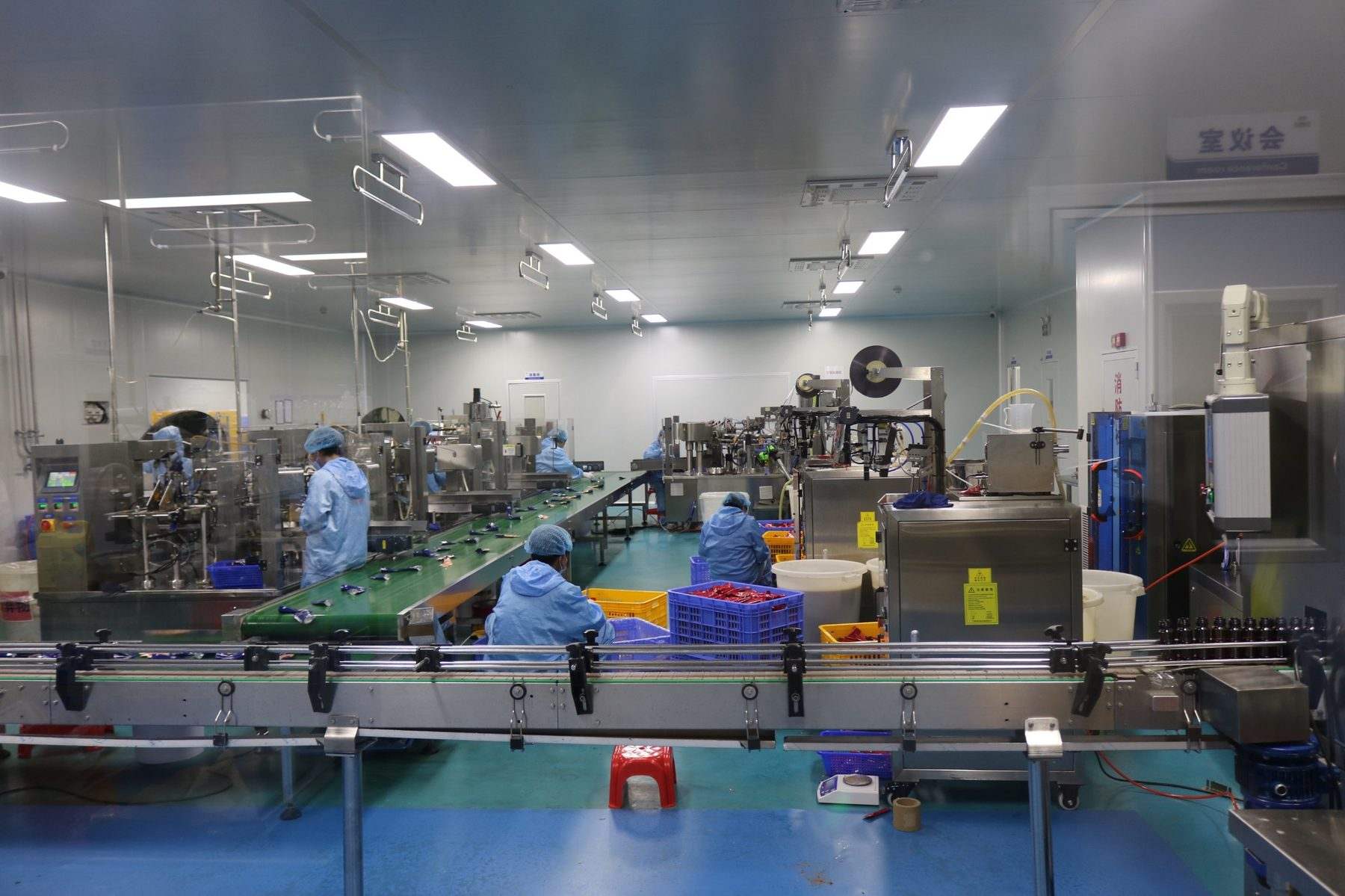
YKNatura is the supplement manufacturing brand of Yukang Medicine (Guangzhou) Co., Ltd. We work with supplement brands, distributors and e-commerce businesses on private label, OEM and ODM projects. Depending on the product and market, discussions may cover formula direction, product format, sample development, ingredient sourcing, bottle or pouch options, label coordination, packaging, bulk production and agreed quality documentation.
If you are still comparing formats, start with the YKNatura supplement product formats. If you already have a formula, a sample or a packaging concept, share the target market, expected quantity and launch window so the project can be evaluated against the right production assumptions.
Frequently Asked Questions
How much does it cost to launch a supplement brand?
Cost depends on the formula, ingredient dosage, format, packaging, order quantity and destination market. A standard capsule project has a different cost structure from a customized gummy, powder or liquid project. A defined product brief is the best starting point for a useful quotation.
What is the fastest way to start a supplement brand?
A ready-to-customize private label route can be faster when the brand is comfortable with an available formula and mainly needs its own label and packaging direction. A custom formula can be the better route when the product needs a specific ingredient combination, dosage or positioning.
What should I approve before mass production?
Confirm the final formula, serving size, approved sample feedback, packaging format, label artwork, unit count, estimated quantity, production requirements and the testing or documentation discussions relevant to the project.
How long do supplement samples take?
Standard sample development at YKNatura is typically 7–10 days after requirements are confirmed. The timing can change with ingredient availability, flavor work, specialized formats and packaging needs.
Can I start if I only have a product idea?
Yes. A clear target customer, market, preferred format and reference product or ingredient direction are enough to start a practical conversation. The remaining decisions can then be organized in the right order.
Do I need finished packaging artwork before contacting a manufacturer?
No. It is useful to know the likely packaging route early, but final artwork can be developed after the container, label size, required information and product specification are understood.
Start With the Right Information
To receive a useful manufacturing recommendation, prepare the details that shape the project: target market, customer profile, preferred dosage form, formula idea or reference product, packaging preference, estimated first order quantity and preferred launch timing. This is enough to move from a loose idea to a workable manufacturing discussion.
Explore manufacturing options at YKNatura or contact the team at marketing@collagenyoung.com / WhatsApp +86 18988857009.
Yukang Medicine Content & Manufacturing Team
Latest Supplement Manufacturing Insights
How to Evaluate a China Supplement Manufacturer Before You Order
Capsules Gummies Powders and Softgels Guide for Supplement Brands