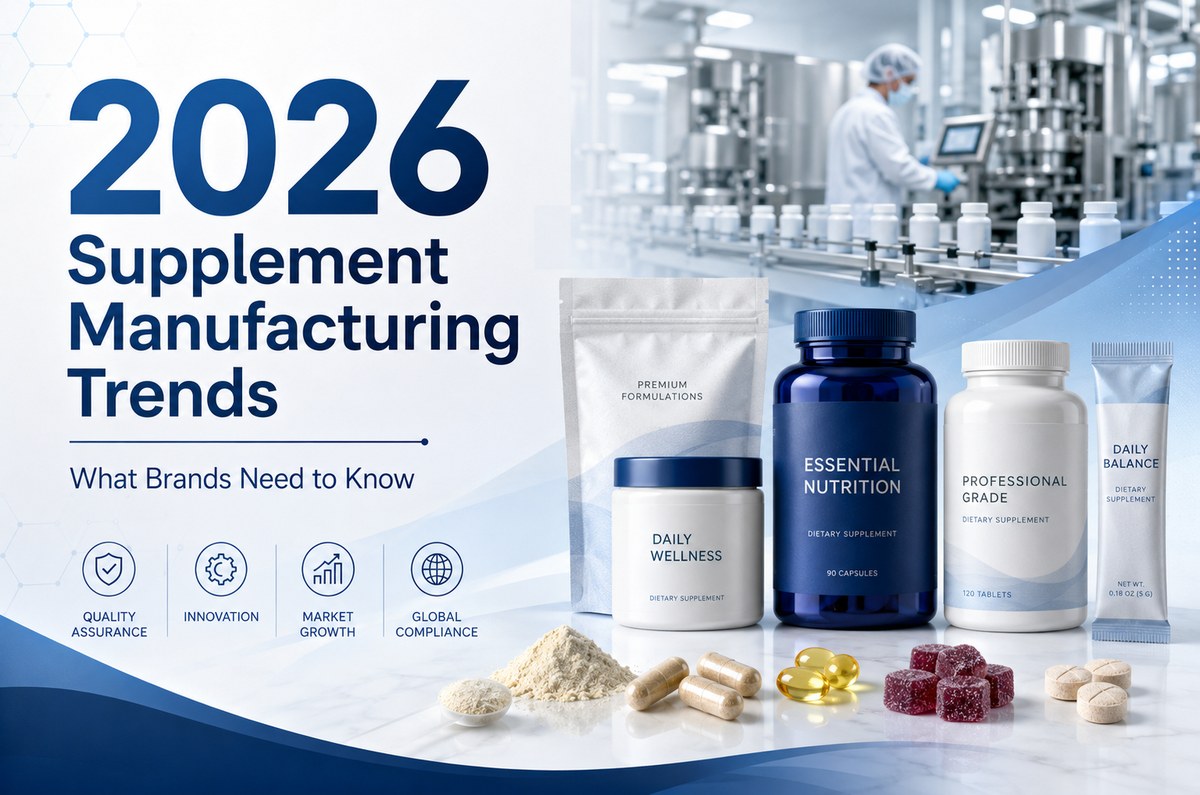
2026 Global Dietary Supplement and OEM/ODM Manufacturing News & Trends Brief
-
 admin
admin - 25th August 2026
A 2026 industry brief covering global dietary supplement regulation, fast-growing dosage forms, longevity and gut-health formulations, supply-chain compliance, and practical strategies for OEM/ODM manufacturers and brands.
Industry Updates | Regulatory Policy | Market Trends | Popular Formulas | Supply Chain Compliance
1. Regulatory Update: The U.S. FDA Is Reviewing a Broader Scope for Supplement Ingredients
The U.S. FDA is re-evaluating current dietary supplement regulations. Historically, many rules have focused on ingredients derived from traditional foods, vitamins, minerals, and botanicals. Today, supplement brands and contract manufacturers are pushing for clearer pathways that could allow innovative active ingredients such as peptides and specific probiotic strains to be formally recognized within the dietary supplement category.
For OEM/ODM manufacturers, clearer rules could create new opportunities in liquid peptides, collagen peptides, anti-aging oral liquids, and other advanced formulations. It also means manufacturers will need stronger capabilities in active-ingredient testing, bioactivity preservation, stability control, and compliance documentation.
2. Dosage Form Trend: Liquid Supplements Continue to Grow Rapidly
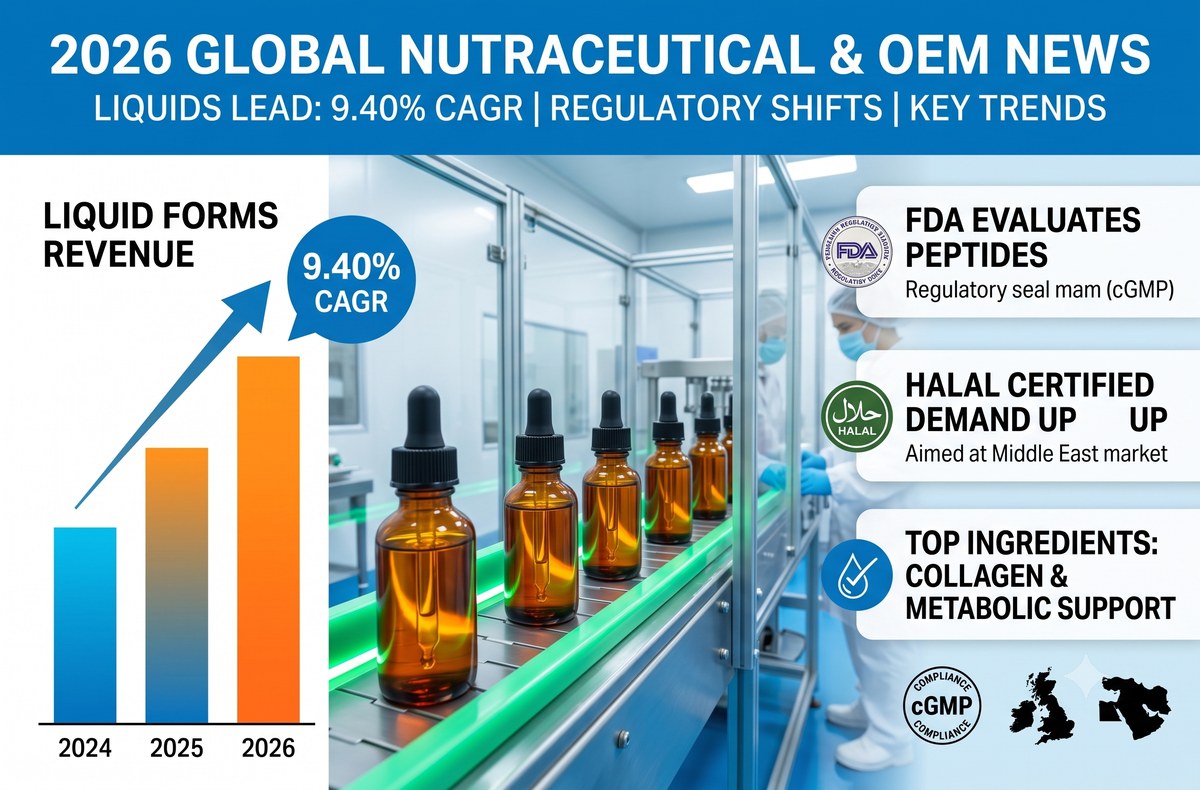
According to recent global dietary supplement market research, the worldwide supplement market has exceeded USD 218.8 billion. Among all dosage forms, liquid products—including bottled collagen drinks, oral liquids, and concentrated drops—are among the fastest-growing formats, with a reported compound annual growth rate of approximately 9.40%.
This growth is driven by consumer demand for higher bioavailability, convenient on-the-go use, and premium packaging. As a result, more traditional tablet and capsule brands are expanding into liquid oral supplements and glass-bottle packaging to improve product positioning and user experience.
3. Popular Formula Trends: Longevity, Healthy Aging, and Gut-Metabolic Health
Longevity and healthy aging are no longer limited to older consumers. Gen Z and millennial consumers are also paying earlier attention to anti-aging, beauty-from-within, and long-term wellness. Ingredients such as collagen peptides, spermidine, nicotinamide-related compounds, and high-concentration antioxidant botanical extracts are seeing stronger demand in markets such as the United States, the United Kingdom, and the Middle East.
Metabolic and gut health are also becoming major innovation areas. With global interest in GLP-1-related weight-management topics remaining high, compound formulas that support blood-sugar balance, metabolic health, and the gut microbiome—such as prebiotics, digestive enzymes, probiotics, and postbiotics—are attracting increasing attention from global supplement brands.
4. Supply Chain and Ingredient Compliance: Transparency and Multi-Market Certification Are Becoming More Important
As global supply chains and multi-ingredient blends become more complex, North American and European markets are placing greater emphasis on cGMP traceability, raw-material identity testing, third-party verification, and complete production documentation.
For the Middle East and GCC markets, halal certification is becoming increasingly important. Brands exporting to these regions often require clean halal-certified production lines, alcohol-free formulas, and dedicated import quality documents. OEM/ODM factories with halal certification can build a strong competitive advantage when serving Middle Eastern customers.
5. Strategic Recommendations for Supplement Brands and OEM/ODM Manufacturers
Focus on liquid supplements and glass-bottle packaging. Automated amber glass-bottle filling lines can help manufacturers enter the premium oral-liquid segment, where products often command higher unit prices and stronger brand positioning.
Strengthen multi-market compliance qualifications. Maintaining cGMP and ISO-based production standards while preparing halal certification can help brands and manufacturers reduce entry barriers in the U.S., U.K., and Middle Eastern markets.
Invest in thought-leadership content. Regularly publishing trend reports, quality-control articles, and formulation insights on B2B channels such as LinkedIn can help attract overseas brand owners, procurement teams, and decision-makers.
Conclusion
In 2026, the supplement industry is being shaped by regulatory evolution, premium dosage formats, longevity-oriented formulas, gut-metabolic health innovation, and stricter compliance expectations. For brands, success will depend on choosing manufacturing partners that can support formulation, packaging, quality control, documentation, and fast market entry. For OEM/ODM factories, the next stage of growth will come from combining manufacturing capacity with formulation expertise, compliance readiness, and market insight.
SEO Title
2026 Supplement Manufacturing Trends | OEM/ODM Dietary Supplement Industry Brief
Meta Description
Explore 2026 dietary supplement industry trends, including FDA regulatory updates, liquid supplements, longevity formulas, gut health, halal compliance, cGMP, and OEM/ODM manufacturing strategies.
admin
Recent Posts
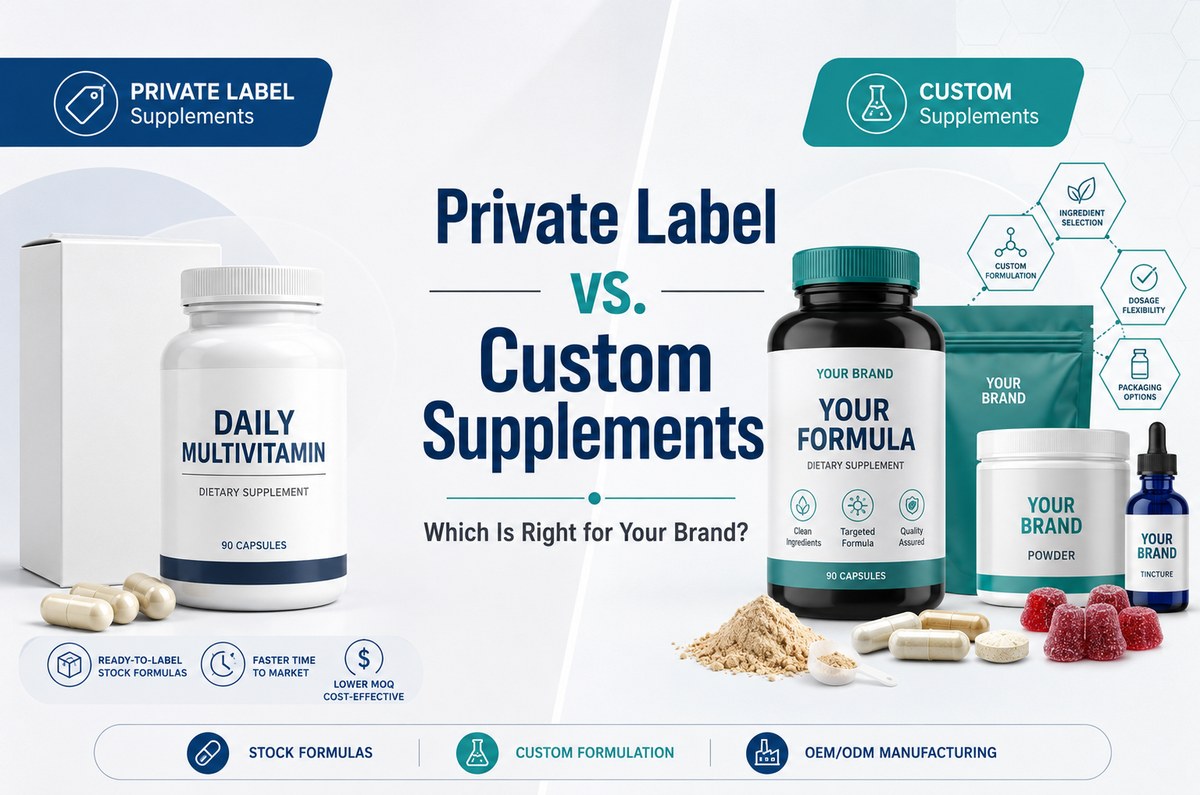
Private Label vs. Custom Supplements: Which Is Right for Your Brand?
2026 Supplement Manufacturing Trends: What Brands Need to Know