Private Label vs Custom Supplement Manufacturing: Which Fits Your Brand?
-
 Yukang Medicine Content & Manufacturing Team
- 25th August 2026
Private Label vs Custom Supplement Manufacturing: Which Fits Your Brand?
Private label supplement manufacturing is a practical starting point when an existing formula meets your product requirements. Custom manufacturing is more suitable when your brand needs a specific ingredient profile, serving size, sensory experience or delivery format. Compare both options using the same product brief, including sampling, testing, packaging and delivery requirements.
The right choice depends on what your product must deliver—and which parts of that specification can remain flexible.
One useful distinction: contract manufacturing describes outsourcing production. Private label and custom formulation can both sit within that relationship. Ask suppliers what their service includes instead of relying on terminology alone.
Private Label vs Custom Manufacturing: Key Differences
| Decision factor | Private label | Custom manufacturing |
|---|---|---|
| Formula starting point | An existing manufacturer formula | A formula developed or adapted to your brief |
| Formula flexibility | Usually limited to available options | Greater scope to define ingredients, amounts and format |
| Development work | Often less when the existing specification is accepted | May require feasibility work, sourcing and several sample rounds |
| Sampling | Confirms whether the existing product meets expectations | Helps evaluate and refine the proposed specification |
| Minimum order quantity | Depends on the selected product and packaging | Depends on production batch size, ingredients and packaging |
| Timeline | Can be shorter when formula and materials are ready | Includes additional development and approval stages |
| Formula ownership | Existing formulas may be available to other brands | Ownership and exclusivity must be agreed in writing |
Neither model automatically guarantees a lower unit price, exclusive rights or a particular launch date. These depend on the agreed specification and contract.
When Should You Choose Private Label Supplements?
Private label is worth considering when you have identified your target customer but can accept an existing formula.
It may suit your project if:
- You want to evaluate demand before investing in extensive development.
- Your preferred ingredient profile already exists.
- Packaging, positioning and distribution are central to your differentiation.
- You want to add a complementary product to an existing range.
Before choosing a stock formula, request its complete specification. Check ingredient amounts per serving, serving count, excipients, available documentation and packaging options.
An existing formula still needs to fit your intended market and customer expectations.
When Is Custom Supplement Manufacturing a Better Fit?
Custom manufacturing is worth considering when a standard product cannot meet an essential part of your brief.
Examples include a specific ingredient combination, a different amount per serving, a particular flavor profile or a delivery format that changes how customers use the product.
Define your non-negotiable requirements before development begins. Separate them from preferences that can change if sourcing, cost or manufacturing feasibility becomes a constraint.
Custom development also requires an approval process. Agree who reviews samples, how feedback is recorded and when the formula becomes final.
Compare Total Project Cost, Not Just Price per Bottle
Two manufacturing quotes are only comparable when they describe equivalent products and services.
Ask each supplier to identify whether the quotation includes:
- Formula development and sample revisions.
- Ingredients and manufacturing.
- Agreed testing and product documentation.
- Bottles, pouches, labels, cartons and other packaging.
- Artwork preparation or printing setup.
- Freight and any other separately charged services.
Compare the same ingredient forms, amounts per serving, servings per pack and packaging specification.
For example, a 60-capsule bottle providing two capsules per serving contains 30 servings. A 60-capsule bottle providing three capsules per serving contains 20. Matching bottle counts alone does not establish equivalent value.
For an itemized view of available support, explore YKNatura’s supplement manufacturing services.
What Determines MOQ and Lead Time?
Minimum order quantity can come from several different constraints: manufacturing batch size, an ingredient purchase minimum or the packaging supplier’s minimum order.
Ask whether the quoted MOQ applies per formula, flavor, SKU or packaging design. Also clarify who owns and stores any unused custom packaging.
For timing, separate the project into milestones:
- Product brief and feasibility review.
- Ingredient and packaging sourcing.
- Sample preparation and approval.
- Label and artwork approval.
- Production, agreed testing and release.
- Shipping.
A production estimate should state when the clock starts. A timeline beginning after sample and artwork approval does not describe the full period from first inquiry to delivery.
How Should You Evaluate Supplement Samples?
Use a written sample review checklist for both private label and custom products.
Evaluate the attributes relevant to your format: appearance, taste, odor, texture, dispersibility, serving instructions and packaging usability. Record the sample version and any requested changes.
Discuss format-specific requirements when reviewing capsule manufacturing, gummy manufacturing or powder manufacturing options.
Sensory approval does not establish ingredient potency, microbiological quality or shelf life. Agree which specifications, tests and supporting documents are needed, and distinguish a development sample from the finished production batch.
Who Owns a Custom Supplement Formula?
Custom development does not automatically establish exclusive ownership.
Before paying development fees, clarify:
- Who owns the original formula and subsequent revisions?
- Can the manufacturer supply the same formula to another customer?
- Does any exclusivity apply to a territory, sales channel or period?
- What information can be transferred if you change manufacturers?
- Who approves ingredient substitutions?
Record the agreed terms in writing. A confidentiality agreement and a formula ownership agreement address different questions.
A Practical Way to Choose
The following are illustrative scenarios, not customer case studies.
An initial market test: If an available formula meets your requirements and you want to assess demand, private label may be a sensible starting point.
A differentiated flagship product: If the product depends on a specific composition or sensory experience, custom development may better support the brief.
An expanding product range: Review existing formulas first, then identify whether any required modification changes development work, MOQ or timing.
For a broader explanation of production models, read our private label supplement manufacturing and OEM/ODM guide.
Frequently Asked Questions
Is private label always cheaper than custom manufacturing?
No. It may reduce development work, but total cost also depends on ingredients, order volume, testing and packaging. Compare itemized quotations against the same specification.
Can I customize a private label formula?
Some manufacturers offer modifications. Ask whether the proposed change requires new development, additional samples, different testing or a revised MOQ.
Does custom manufacturing guarantee exclusivity?
No. Exclusivity, formula ownership and reuse rights need to be agreed in the manufacturing or development contract.
Which manufacturing model is faster?
An existing formula can reduce development time. However, ingredient availability, packaging, sample approval and production scheduling still determine the actual timeline.
What should I prepare before requesting a quote?
Provide your target market, product format, preferred ingredients, amounts per serving, servings per pack, estimated order quantity, packaging requirements and intended launch window.
Discuss Your Supplement Project With YKNatura
YKNatura supports supplement projects with formulation, sampling, manufacturing, labeling and packaging services.
Share your product brief so the team can assess whether an existing formula or custom development is a better starting point. Ask for a quotation that clearly identifies the specification, included services, approval stages and estimated timeline.
Request a supplement manufacturing quotation.
About the author
The YKNatura Editorial Team is part of Yukang Medicine (Guangzhou) Co., Ltd. The team publishes information on supplement product development, private label manufacturing and OEM/ODM services. Learn more about YKNatura.
Yukang Medicine Content & Manufacturing Team
Latest Supplement Manufacturing Insights
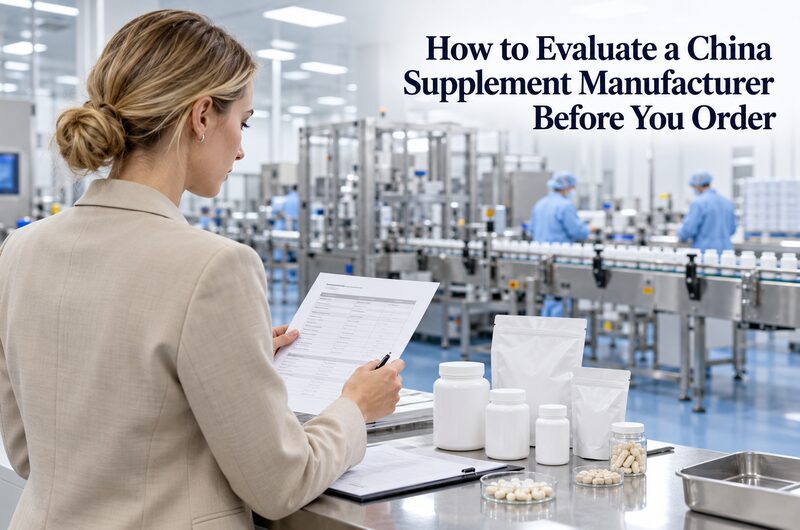
How to Evaluate a China Supplement Manufacturer Before You Order
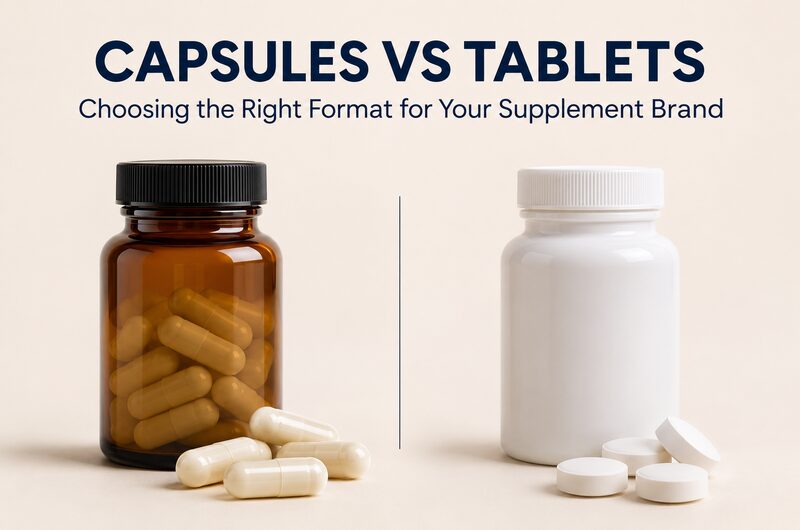
Capsules Gummies Powders and Softgels Guide for Supplement Brands