Case Study: From a Powder Brief to a Production Ready Private Label Project
An anonymized private label powder project, from early product brief to production-ready specification.
| Case summary: An international wellness brand approached YKNatura with an early-stage daily powder concept. The project required the team to turn an open brief into an aligned formula direction, sample-review plan and packaging specification before commercial production could be scheduled. |
Client confidentiality notice: The client asked to remain anonymous. Specific brand identity, formula details, commercial terms, quantities and market information have been withheld. This case study describes the project process and decision framework without disclosing confidential information.
Project at a glance
| Project area | Scope |
| Client profile | International wellness brand launching a private label daily powder product |
| Starting point | A product concept and ingredient direction, with key formula and pack decisions still open |
| Primary needs | Formula feasibility review, sample planning, packaging alignment and production-ready specifications |
| Manufacturing route | Private label powder manufacturing with customized project planning |
| Confidentiality | Client name, commercial quantities and detailed formula are not disclosed |
The situation: a clear market idea, but an incomplete manufacturing brief
The client knew the type of product they wanted to introduce: an everyday wellness powder for their own brand. They had initial ingredient preferences and a view of the customer they wanted to reach. What they did not yet have was a fully defined product brief that could be quoted and produced consistently.
Several decisions were still interconnected: the final serving size would affect formula feasibility and pouch size; the packaging choice would influence filling and labeling requirements; and the sample review needed to confirm more than a visual preference.
This is a common position for growing brands. The product idea may be strong, but the steps between “we want to launch a powder” and “this is ready to manufacture” still need to be made visible.
What the project needed to solve
- Translate the product concept into a powder format and serving framework that could be evaluated for manufacturing.
- Define which elements required sample review before the product specification could be locked.
- Choose a packaging route that matched the intended customer experience and production requirements.
- Create a clear approval sequence so formula, sample, artwork and packaging did not move forward independently.

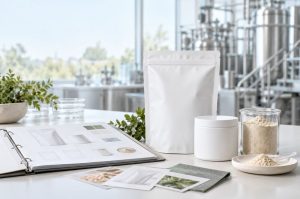
New powder samples gave the project team a concrete basis for specification and packaging decisions.
Our approach: make the decisions in the right order
Rather than starting with packaging artwork or a final unit-price comparison, the project began with a working product brief. The brief clarified the target format, proposed serving direction, ingredient preferences, packaging intent and the questions that still needed a decision.
The YKNatura team then used that brief to guide the next steps. This allowed the client to assess the product as a connected system: formula, sample, pack format and production planning were discussed together rather than as separate tasks.
1. Align the powder format with the intended use
The first task was to make the format practical. For powder products, serving weight, flavor expectations, mixability expectations and the customer’s daily routine can all affect the final product direction. The team reviewed the concept as a powder project, rather than treating the formula as a list of ingredients that could automatically fit any packaging.
This is one reason brands developing drink mixes, sticks or tubs should involve their manufacturer early. A private label powder supplement needs a serving and pack format that support the actual product experience—not just the label concept.
2. Use sample review to settle the questions that matter
Sample development gave the client something more useful than a preliminary product to look at. It created a point for the team to review the proposed format, powder handling and packaging direction against the original brief.
The purpose was not to treat a sample as a final promise before every detail had been confirmed. It was to identify what the final specification needed to state clearly before production: the agreed formula direction, serving framework, pack format and approval responsibilities.
3. Bring packaging into the production conversation early
For a powder project, packaging is part of the manufacturing plan. A stand-up pouch, a tub or single-serve sticks can all support a similar product concept, but they create different filling, component and shipping considerations.
The project therefore treated packaging as an early decision. This helped the client move from a visual preference to a practical pack specification that could be reviewed alongside the product itself.

Packaging and production readiness depend on an agreed formula and pack specification.
4. Prepare a production-ready approval sequence
Before a production plan could be finalized, the project needed a shared understanding of what “approved” meant. The working sequence was simple: confirm the product brief, review the sample against the intended specification, finalize the packaging information, then move to commercial production planning.
This approach reduced the risk of a formula, artwork or packaging component being treated as final while related decisions remained open. It also gave the client a clearer basis for comparing costs and timing once the project scope was confirmed.
The outcome
The project moved from an open product concept to an aligned private label powder specification that could support sample approval, packaging confirmation and production planning.
The most valuable outcome was not a single isolated decision. It was a clearer project path. The client and manufacturing team were working from the same defined product scope before commercial production arrangements were made.
For brands, this is often the difference between a project that keeps circling through revisions and one that can progress with confidence.
What other supplement brands can learn from this case
- Do not wait until artwork is complete to discuss whether the product format and pack type work together.
- Use samples to confirm the decisions that affect the final specification—not only to judge appearance.
- Write down what is approved, what is assumed and what still needs a decision before production is scheduled.
- Compare manufacturing quotes only when suppliers are pricing the same formula, serving, packaging and commercial scope.
How YKNatura supports private label powder projects
YKNatura supports global brands with private label and OEM/ODM supplement projects across powders, capsules, gummies, softgels, tablets and liquid formats. For powder projects, support can include early formula discussion, sample development, packaging alignment and finished-product manufacturing planning.
If you are comparing a ready-to-customize route with a more tailored project, see our guide to private label and custom supplement manufacturing. You can also explore the full supplement product range or contact the YKNatura team at marketing@collagenyoung.com.
Frequently asked questions
Can you share the client name or the detailed formula?
No. The project is anonymized at the client’s request. We have intentionally excluded client identity, detailed formula information, commercial quantities and other confidential terms.
Why was packaging discussed before production?
Powder packaging affects filling, component selection, label space, pack-out and shipping. Confirming the packaging route early makes the manufacturing plan more realistic.
Can a brand request powder samples before final packaging artwork is ready?
Yes. A project can start from a product brief and sample plan. Packaging assumptions should be identified clearly and confirmed before commercial production.
What information should I prepare for a private label powder project?
Share your target market, intended customer, desired serving, ingredient direction, flavor expectations where relevant, packaging preference, estimated quantity and target timing.